本文转载于Journal of Integrative Dermatology,不代表本网站赞同其观点和对其真实性负责,我们只作于阅读分享,非商业用途,如若侵权,请告知删除。
Nicole Natarelli, BA 1 , Yvonne Nong, MS 2,3,4 , Jessica Maloh, ND 2,3 , Raja Sivamani, MD, MS, AP 2,3,5,6 a
1 Morsani College of Medicine, University of South Florida, Tampa, Florida, 2 Pacific Skin Institute, Sacramento, CA, 3 Zen Dermatology, Sacramento,
CA, 4 Michigan State University College of Human Medicine, Flint, Michigan, 5 Department of Dermatology, University of California-Davis, Sacramento,
CA , 6 College of Medicine, California Northstate University, Elk Grove, CA
Keywords: hypochlorous acid, integrative dermatology, wound healing, scar management, infection, atopic dermatitis, pruritus
Relevance
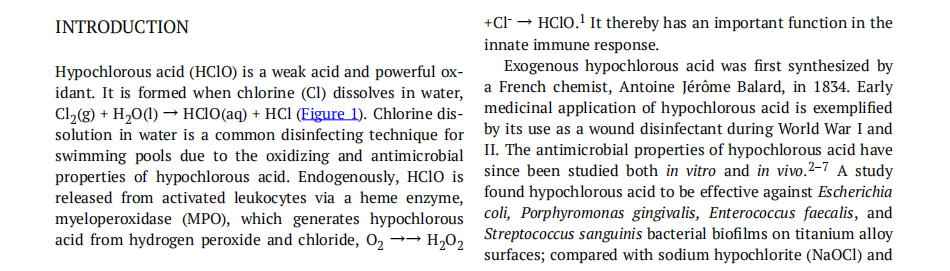
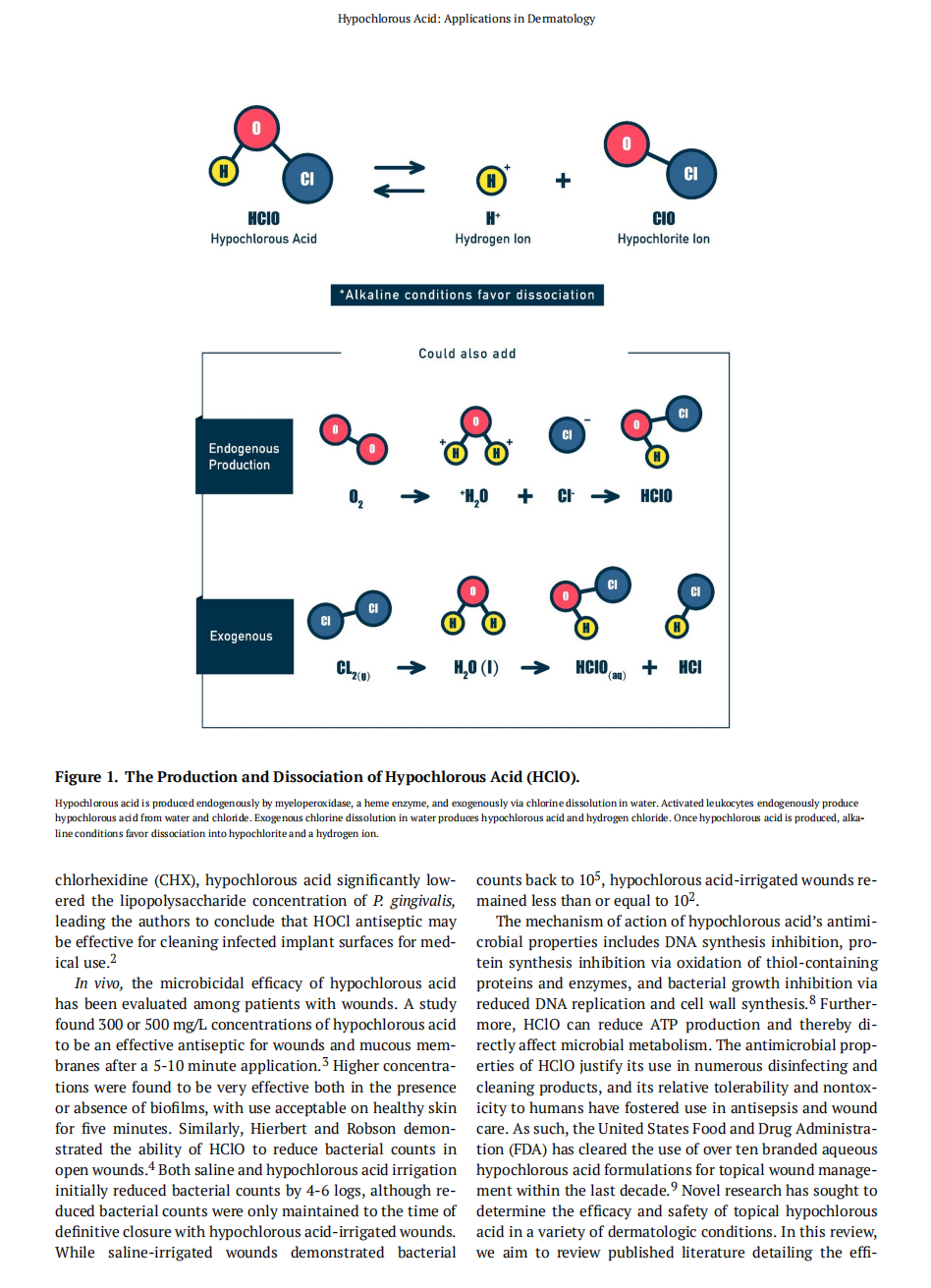
Hypochlorous acid (HClO) is a weak acid and powerful oxidant traditionally used as an active ingredient in various sanitizers and disinfectants. HClO is produced endogenously from activated leukocytes, and it was first exogenously synthesized in 1834, later to be used medicinally as a wound disinfectant during World War I and II.
Objective
In this review, we aim to review the literature assessing the efficacy and safety of dermatologic uses of topical hypochlorous acid.
Methods
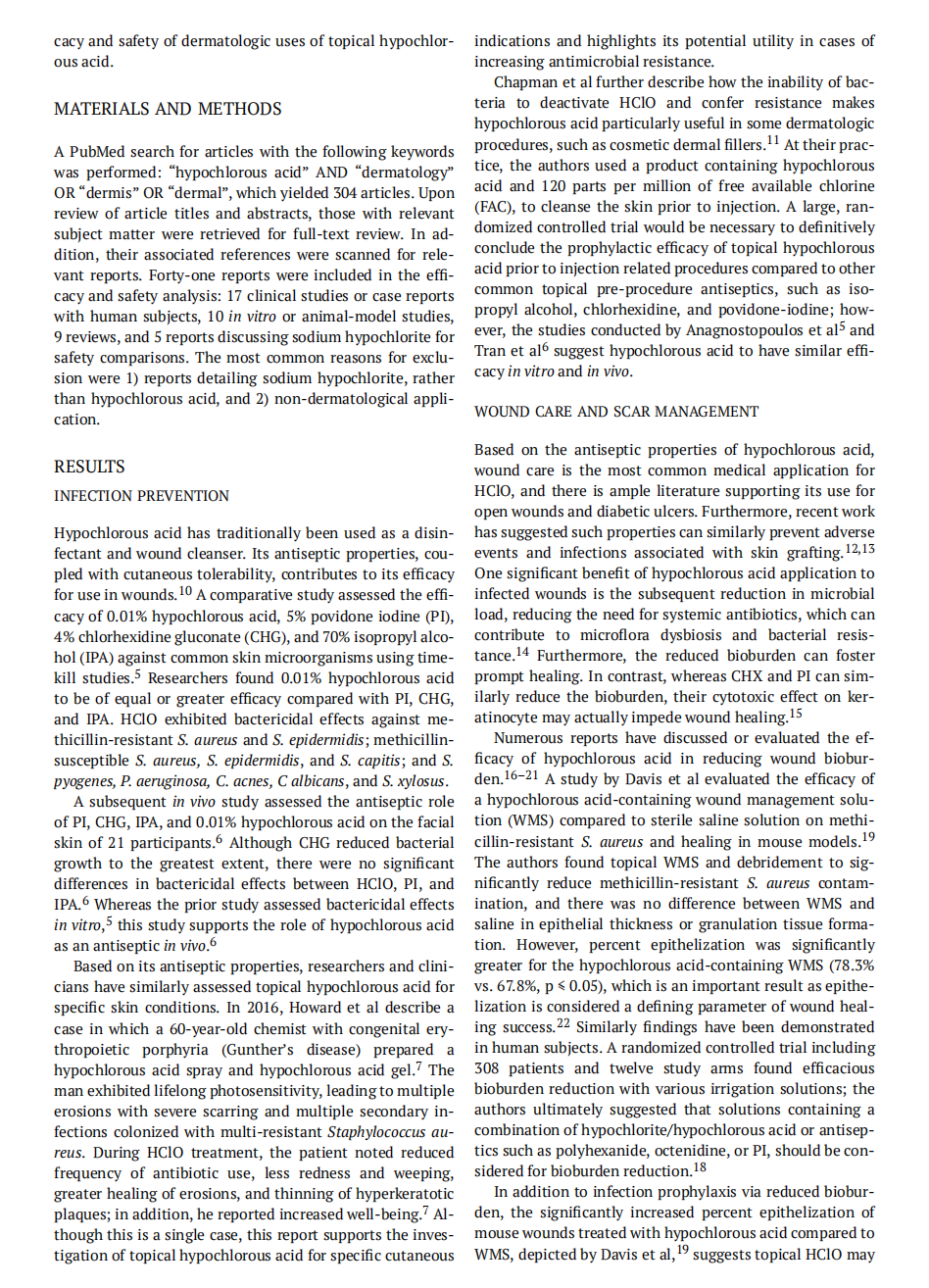
A PubMed search for articles with the following keywords was performed: “hypochlorous acid” AND “dermatology” OR “dermis” OR “dermal.” Forty-one reports were included in the efficacy and safety analysis.
Results
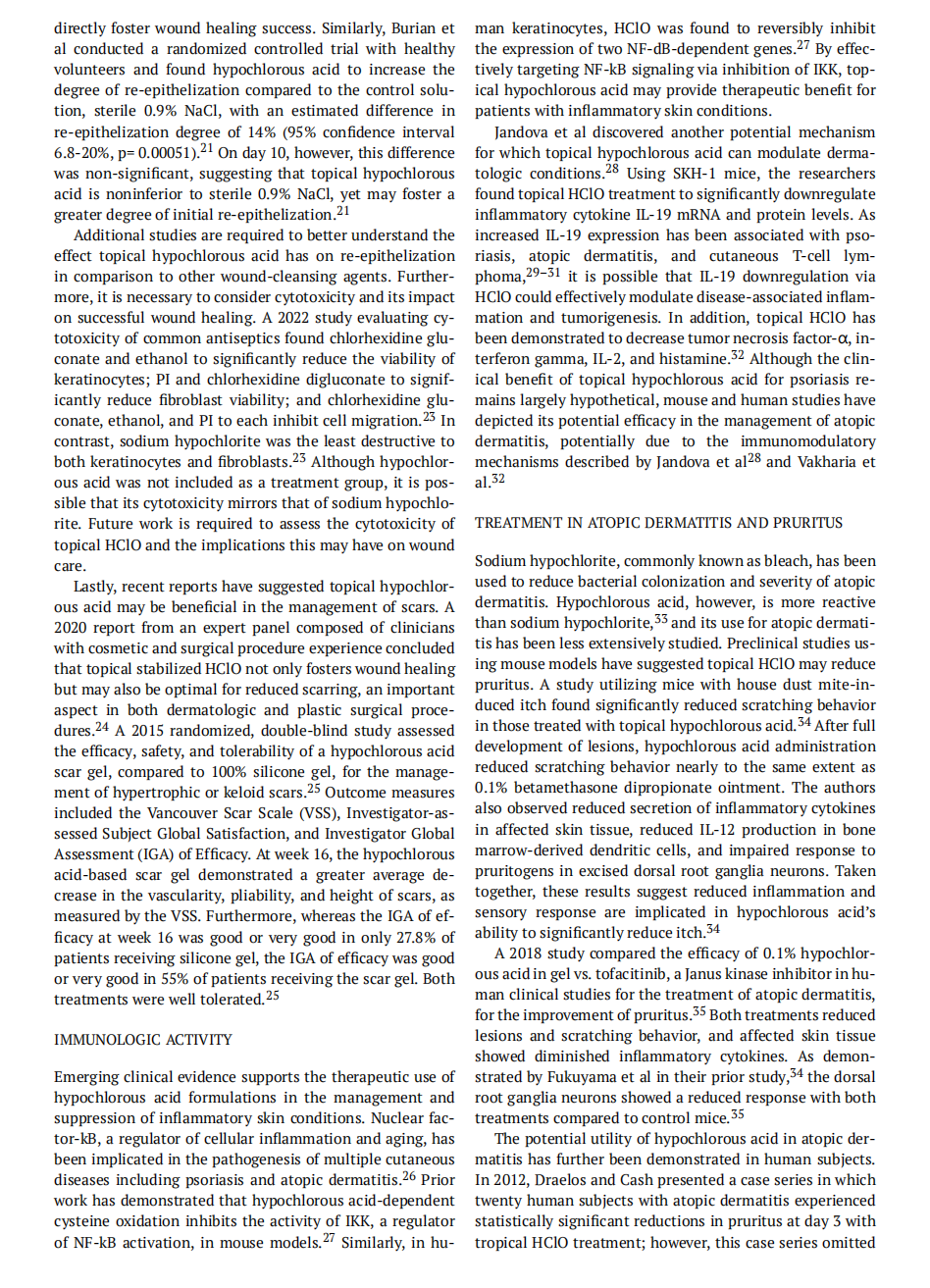
Hypochlorous acid exhibits antimicrobial properties and has been demonstrated to promote re-epithelialization in wound healing with low cytotoxicity to keratinocytes and fibroblasts. Recent work has highlighted its anti-inflammatory properties via modulation of the NF-kβ signaling pathway and downregulation of inflammatory cytokines; reports have discussed its application for the management of various inflammatory skin conditions including atopic dermatitis and psoriasis.
Conclusion
Dermatologic application of hypochlorous acid includes infection prevention, wound care and scar management, inflammatory modulation, treatment in atopic dermatitis and pruritus. Emerging research has discussed potential applications in acne vulgaris, seborrheic dermatitis, and tumor suppression.
本文转载于Journal of Integrative Dermatology,不代表本网站赞同其观点和对其真实性负责,我们只作于阅读分享,非商业用途,如若侵权,请告知删除。