本文转载于PLOS One,不代表本网站赞同其观点和对其真实性负责,我们只作于阅读分享,非商业用途,如若侵权,请告知删除。
Christopher David Chapman 1,2☯*, Myles Hyla Edward Dakin 2 , Richard Aspinall1☯
1 Centre for Intelligent Healthcare, Coventry University, United Kingdom, 2 Hypo-stream Limited, Cambridge, United Kingdom
☯ These authors contributed equally to this work.
Abstract
Background
Hypochlorite is an antiseptic that has been used for over a century for industrial sterilisation and antisepsis. More recently, the topical application of hypochlorite to severe burn patients increased their rate of survival post infection with Gram-negative bacteria, of which antisepsis cannot be solely responsible.
Methodology
Broth microdilution experiments were performed to confirm anti-microbial activity. Cytokine exposure was performed by dialytic exposure of serum spiked with either interleukin-6 or interleukin-10, accounting for contextually appropriate organic load. Cytokine degradation was measured by immunoassay and by functional bioassay utilising HEK-Blue cells. Hypochlorite mediated cytotoxicity against dermal cells was assessed via direct exposure, followed by a 1-hour attenuation period. Resazurin was utilised to assay the impact of hypochlorite on cell viability.
Results
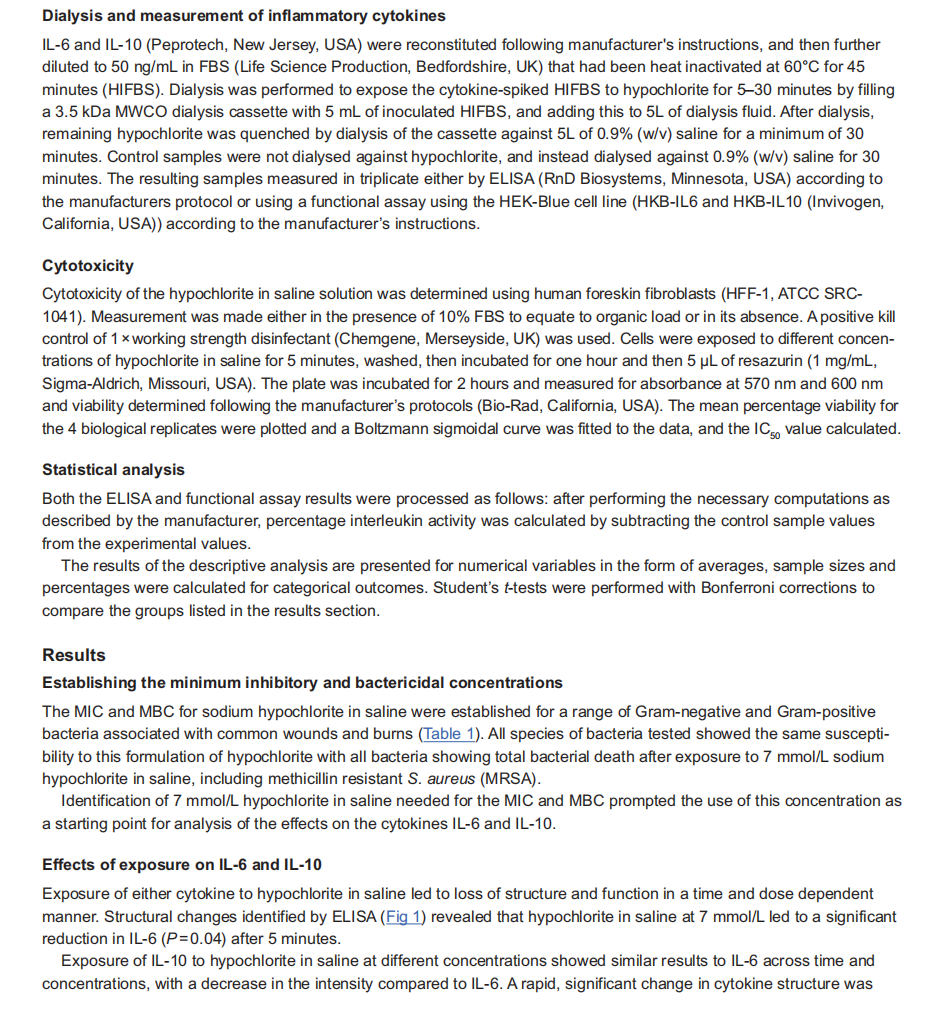
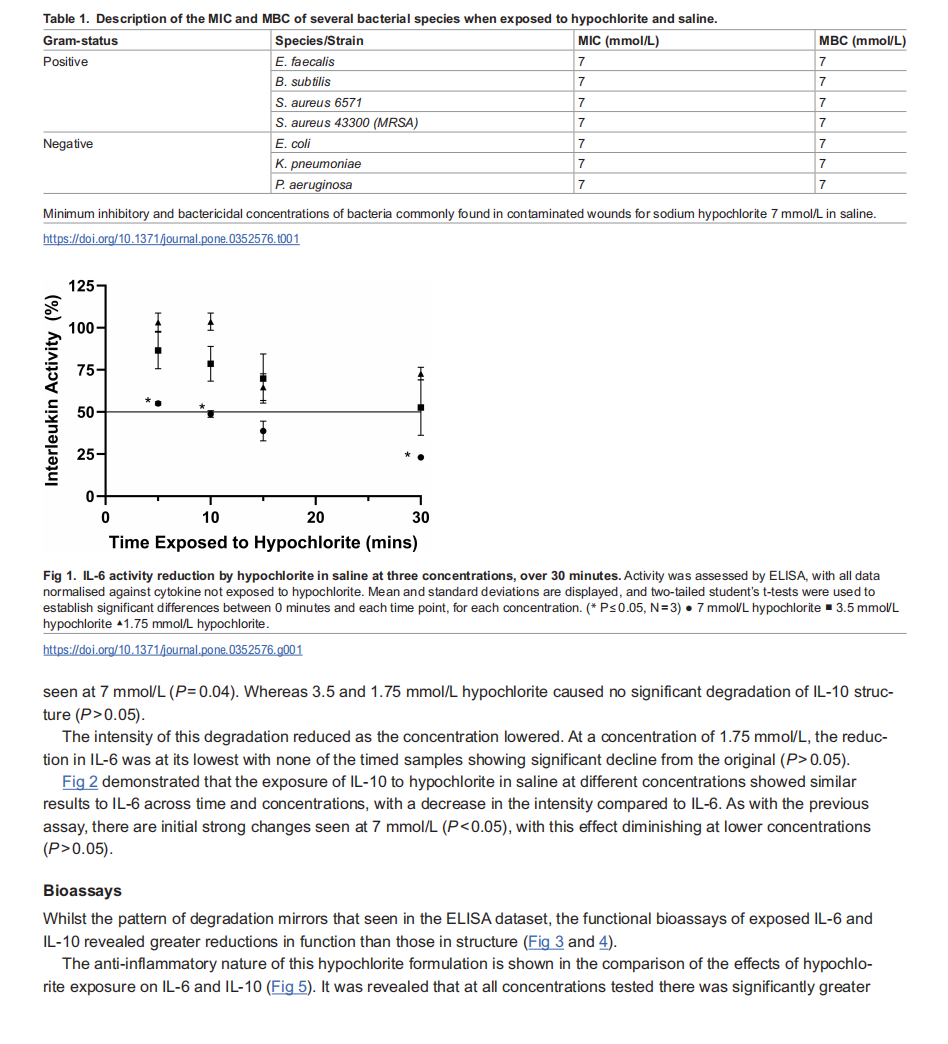
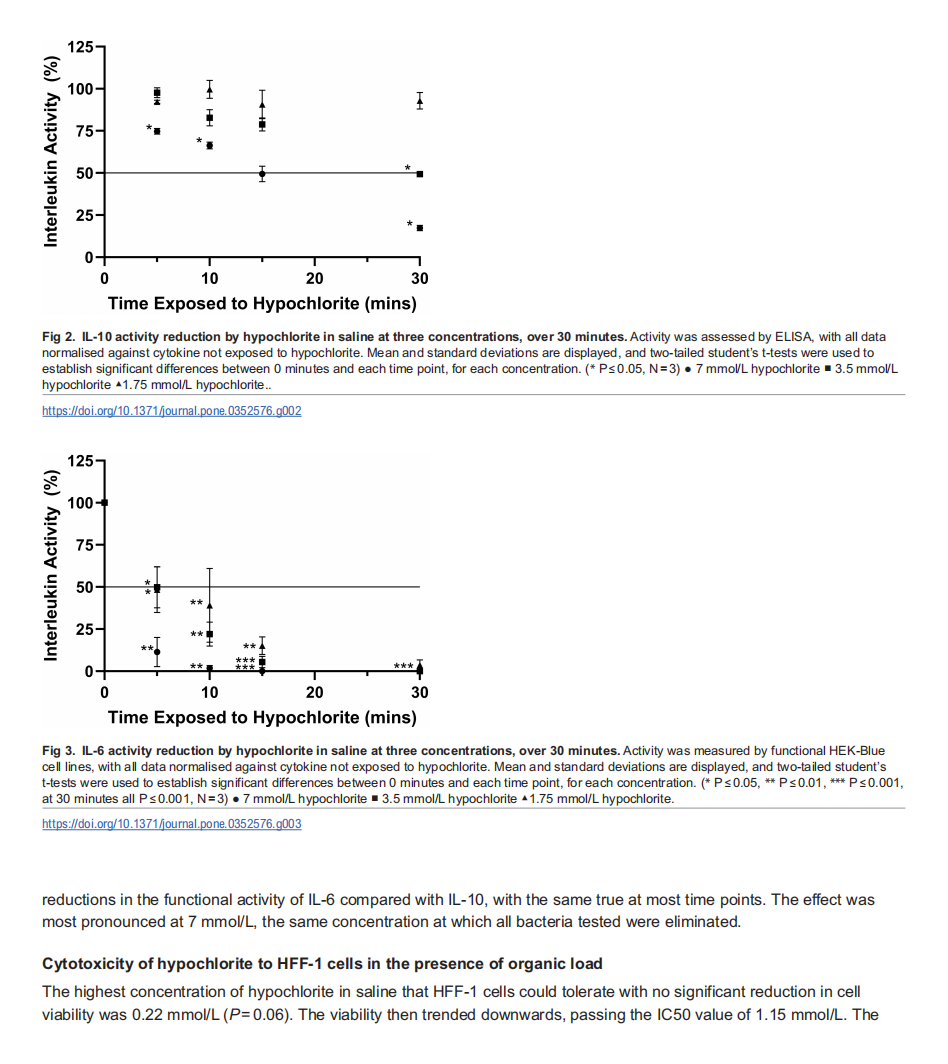
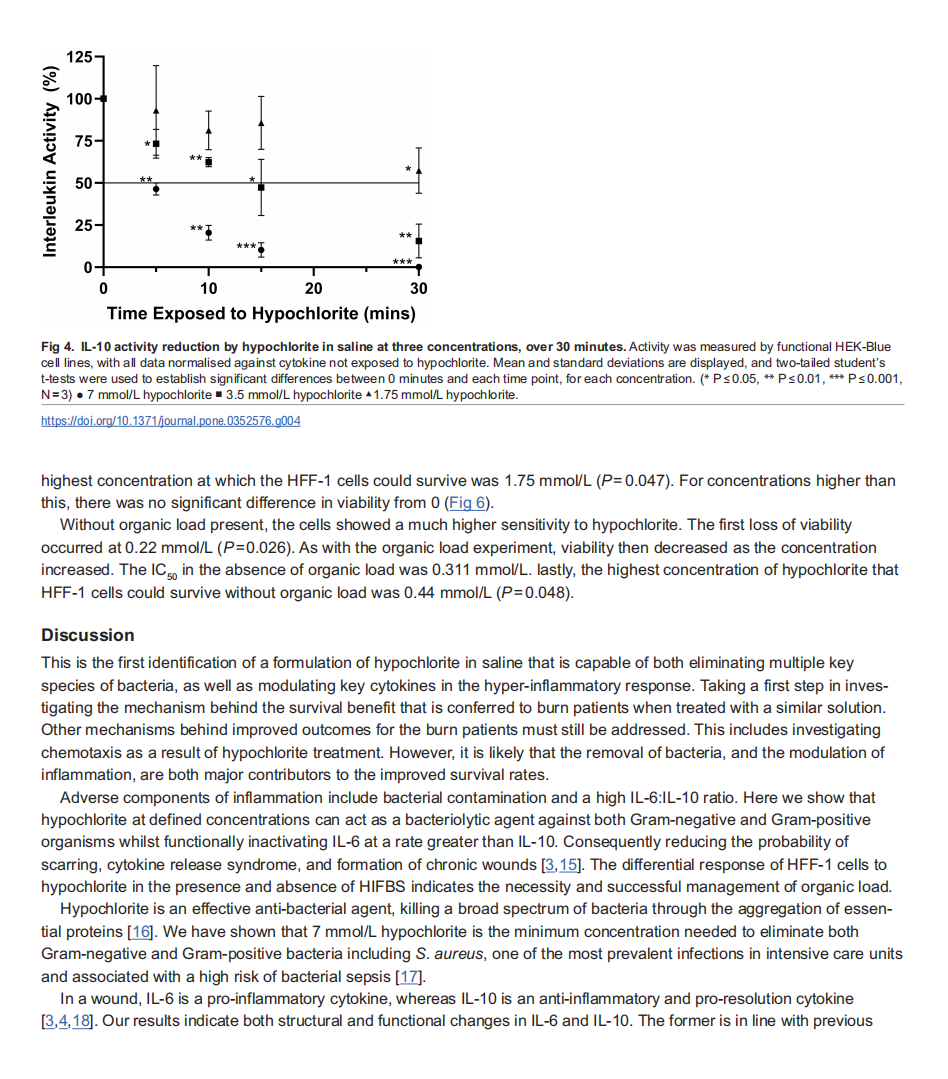
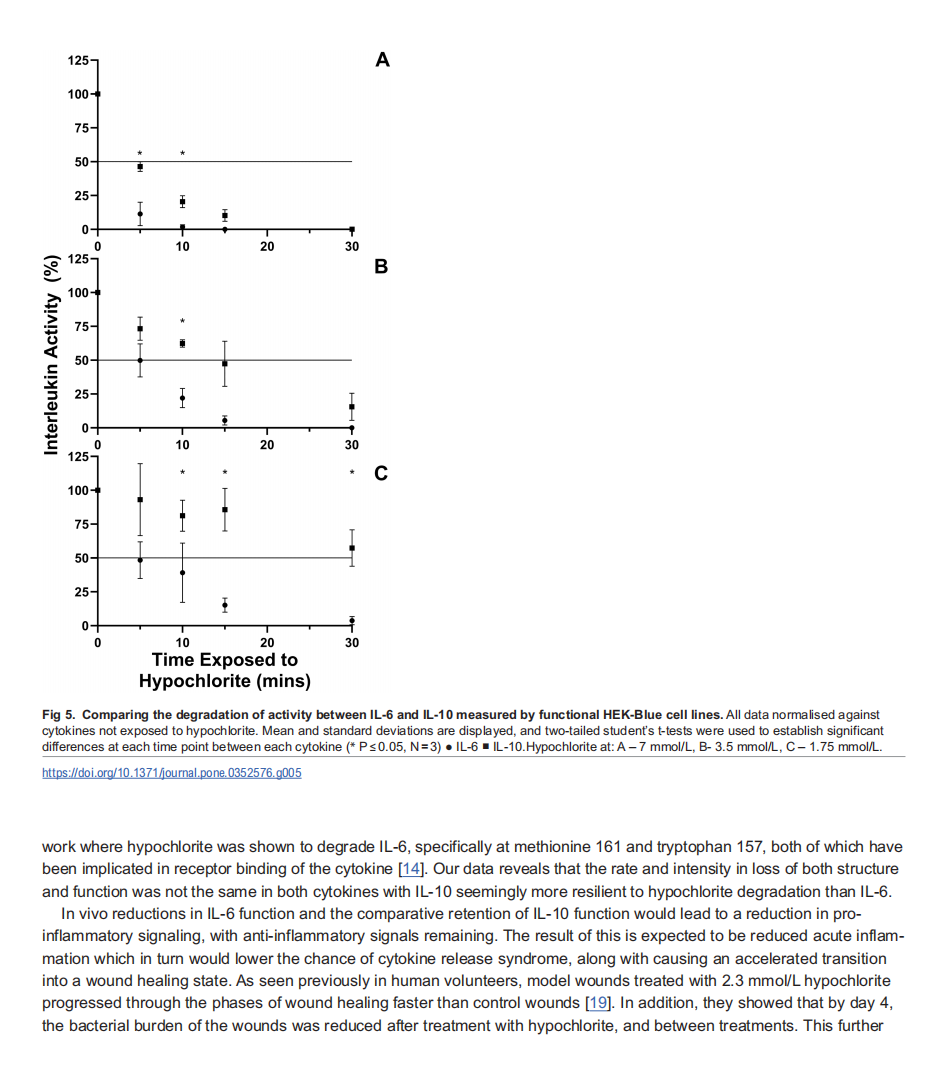
We have shown that this formulation of hypochlorite in isotonic saline has multiple mechanisms. The first is that 7 mmol/L hypochlorite is capable of eliminating both Gram-negative and Gram-positive bacteria, and that the same concentration differentially degrades the function of IL-6 and IL-10. IL-6 was seen to be 3 times more susceptible to loss of function than IL-10 after only 5 minutes of exposure (P<0.005). The asymmetrical effect on these cytokines was observed between 7 and 1.75 mmol/L, and across the entire time scale examined. This hypochlorite formulation has the capability to sterilize a wound, and by altering the cytokine profile reduce inflammation and scarring, and improve wound healing.
Conclusions
These findings, taken with the burn survival study, suggest that the increased survival rate after application of hypochlorite could be due to the combined effect of elimination of infective pathogens, and the differential degradation of interleukin-6 and interleukin-10 at the site of injury
本文转载于PLOS One,不代表本网站赞同其观点和对其真实性负责,我们只作于阅读分享,非商业用途,如若侵权,请告知删除。