Antonio Macedo Jr a,b , Se´rgio Leite Ottoni b , Paula Cartaxo Barros Camilato b , Hugo Santiago Crespo Ganchozo b , Gilmar Garrone b , Ricardo de Mattos Marcondes b , Marcela Leal da Cruz b, *
Summary
Introduction
Diphallia is a rare anomaly. It has a range of appearances from a small accessory penile to complete duplication.
Methods
We present a 2 year-old boy with complete penile duplication. The left penile was the largest. NMR (Nuclear Magnetic Resonance) suggested one corporal body for each penile and VCUG (Voiding Cystourethrogram) showed a normal urethra in the right penile and stricture at glandular and mid penile urethra of the left penis. A Y confluence to bulbar urethra was observed confirming only one prostate and bladder.
Results
The cystoscopy through the right penile identified the urethral confluence in the bulbar area. We performed a meatotomy in the left penile to insert the cystoscope and confirmed the blind ending urethra. We decided to remove this penile. The penile was degloved entirely and clamped and took out the corpora at the base.
Discussion
Diphallia can have three presentations: only glans duplication, bifid diphallia and complete diphallia (two corpora cavernosa and a corpus spongiosum for each penile). In our case, each penile presented only one corpora cavernosa and the decision taken was based on urethral patency.
Conclusion
The treatment should always be planned individually whereas associated anomalies with the goal of attaining satisfactory functional and cosmetic.
Minh-Tung Do a , Louis Kim b , Young Jae Im a,b , Kwanjin Park a,b, *
Introduction The bladder scanner (BS), a portable ultrasound device specialized in bladder volume measurement, has been developed and applied to clinical assessment of postvoid residual urine, which is a requisite in evaluating patients with voiding dysfunction.
However, experiences in the application of the BS to the pediatric population remain limited despite commonly encountered reluctance to catheterization. This prospective observational study aimed to evaluate the correlation and accuracy of the newly developed pediatric module of the BS (BioCon-900) in measuring bladder volume in children 0e6 years.
Materials and methods
This study included 29 patients scheduled to undergo preventive untethering for their spinal dysraphism. When they undergo cystometry for the confirmation of normal neurologic function, bladder volume was measured by BS when recorded volume infusion reached each quartile of the age-adjusted estimated bladder capacity (EBC). The difference (bias) between measured and infused volume was expressed as a percentage of EBC (%EBC). The correlation coefficient and the Bland_Altman plot were obtained to determine the discriminating power and accuracy, respectively. The acceptable limit was set as 30%EBC.
A strong correlation between the measured and infused volume (r = 0.95, P < 0.001) was found for the entire age range. This excellent correlation remained comparable between children less than three years and the older ones. Bladder volume tended to be overestimated, and the mean bias was 33 ± 22.3%EBC, and it became higher with increasing quartiles. The accuracy was acceptable in all ranges of measurement in the older group and first and second quartiles in the younger one.
We have first evaluated the potential use of BS in 0_3 years old children and compared the results with 4_6- year-old children in whom the accuracy of BS has been demonstrated. The strong point of our study was the inclusion of data spanning all quartiles of bladder volume. The use of infused volume as reference enabled us to assess the accuracy in a more precise way than the use of ultrasound. Despite the good discriminating power, the accuracy was not acceptable in higher quartiles in the younger group. If the trend of overestimation especially higher volume, could be understood prior to measurement, it would be helpful to assume the real val.
Conclusions
The children’s module in BS showed excellent discriminating power and generally acceptable accuracy in more than four-year-old children. This may lose accuracy in higher quartiles among less than three years old children.
原创:伤口治疗及造口护理中心
随着现在人们生活水平的逐渐提高,有一种“富贵病”在生活中逐渐出现,渐渐地已经成为生活中的常见病,它就是我们常说的糖尿病。而今天小编不给大家讲糖尿病的相关知识,而是讲一种因糖尿病而引起的一种并发症,它的名字叫糖尿病足!
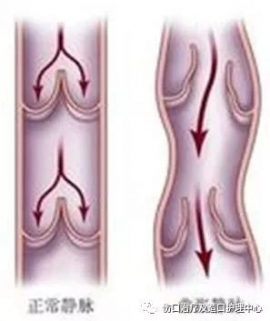
下肢静脉溃疡
下肢静脉性溃疡,俗称“老烂腿”,是下肢静脉疾病的常见临床表现。下肢静脉性溃疡常常反复发作,溃疡久治不愈,严重影响患者的正常生活,因此一旦出现下肢静脉性溃疡的现象,患者应该及时到正规医院的血管外科就医,以查清病因,对症下药。
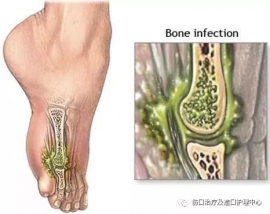
糖尿病足骨髓炎(Diabetic foot osteomyelitis,DFO)与更高的踝上截肢率相关。尽管DFO有着很高的发生率和糟糕的预后,然而针对其治疗却缺乏高质量的证据。由于缺乏基于证据的指南,导致其治疗方法多种多样。作者咨询了14个外科专家,采用Delphi方法获得了关于DFO诊断、治疗和管理的专家共识。同时作者希望有更多有力的研究和更清晰的指南,以便能改善外科治疗的结果。
原创: 蔡秋妮 赫曼关爱健康
肉芽组织在伤口修复、愈合过程中起关键作用。伤口床中存在肉芽组织是伤口愈合的迹象,健康的肉芽组织表现为鲜红色或粉红色表面呈细颗粒状,柔软湿润,分泌物极少,无水肿,无痛觉,不易出血。
伤口世界平台生态圈,以“关爱人间所有伤口患者”为愿景,连接、整合和拓展线上和线下的管理慢性伤口的资源,倡导远程、就近和居家管理慢性伤口,解决伤口专家的碎片化时间的价值创造、诊疗经验的裂变复制、和患者的就近、居家和低成本管理慢性伤口的问题。
2019广东省医疗行业协会伤口管理分会年会
扫一扫了解详情:
任何关于疾病的建议都不能替代执业医师的面对面诊断。所有门诊时间仅供参考,最终以医院当日公布为准。
网友、医生言论仅代表其个人观点,不代表本站同意其说法,请谨慎参阅,本站不承担由此引起的法律责任。