本文转载于ePlasty VOLUME 16 ,不代表本网站赞同其观点和对其真实性负责,我们只作于阅读分享,非商业用途,如若侵权,请告知删除。
John M. Hiebert, MD, FACN, FACS, and Martin C. Robson, MD, FACS, Hon. FRCS, Hon. FRACS
Truman Medical Center, University of Missouri–Kansas City; and Division of Plastic Surgery, University of South Florida, Tampa
Correspondence: 该Email地址已收到反垃圾邮件插件保护。要显示它您需要在浏览器中启用JavaScript。
Keywords: ultrasonic debridement, bioburden, irrigation, hypochlorous acid, wound closure Published December 1, 2016
Introduction: Wound debridement is considered essential in chronic wound management. Hypochlorous acid has been shown to be an effective agent in reducing wound bacterial counts in open wounds. Ultrasound-enabled wound debridement is an effective and efficient method of debridement. This study compared ultrasound irrigation with hypochlorous acid versus saline irrigation for wound debridement on pre- and postoperative wounds and determined regrowth of bacteria over 1 week period of time. Finally, the outcome of definitive wound closure of the clinically clean-appearing wounds was
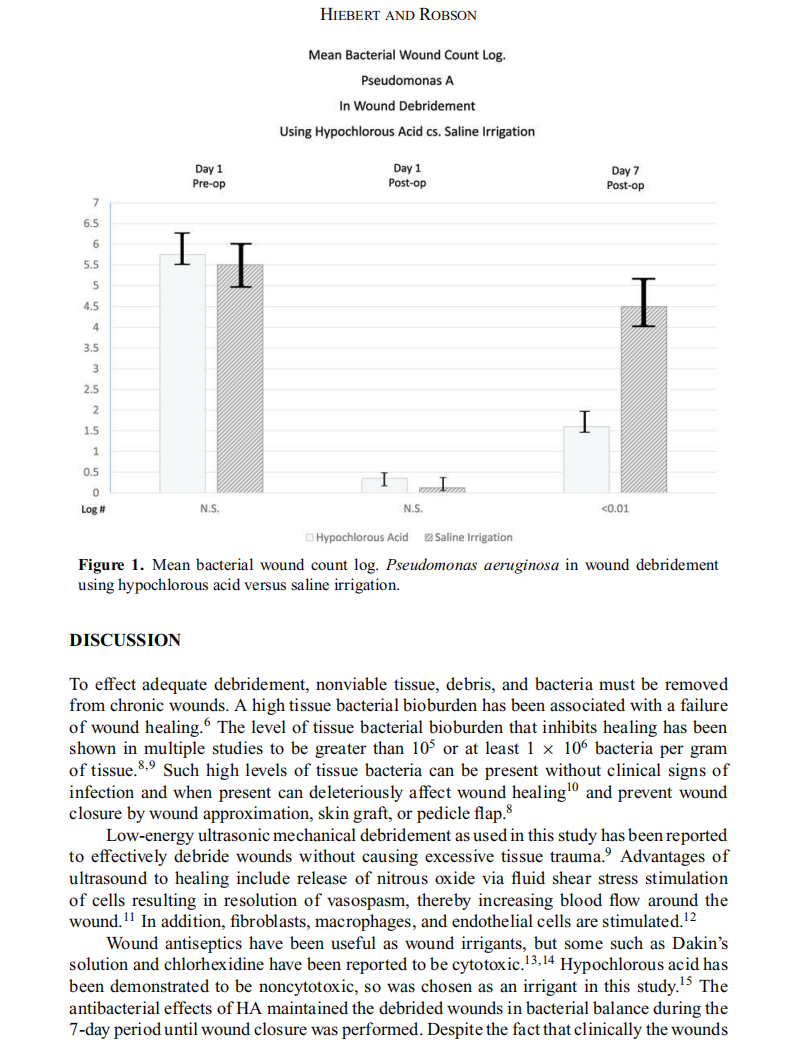
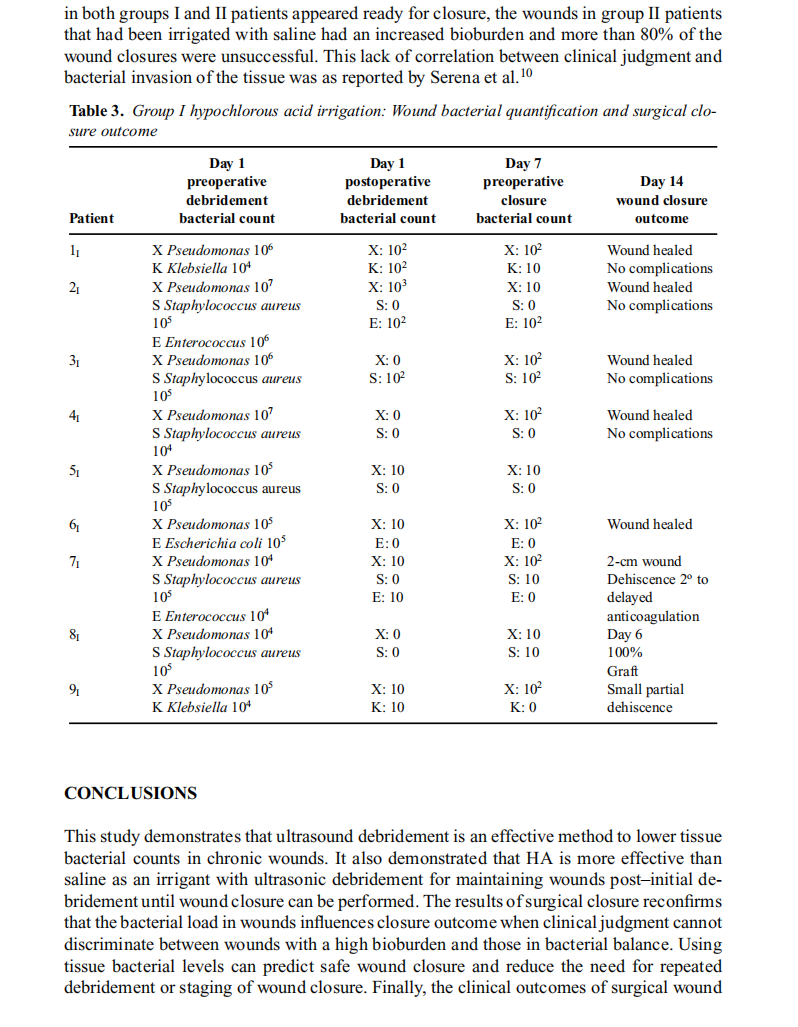
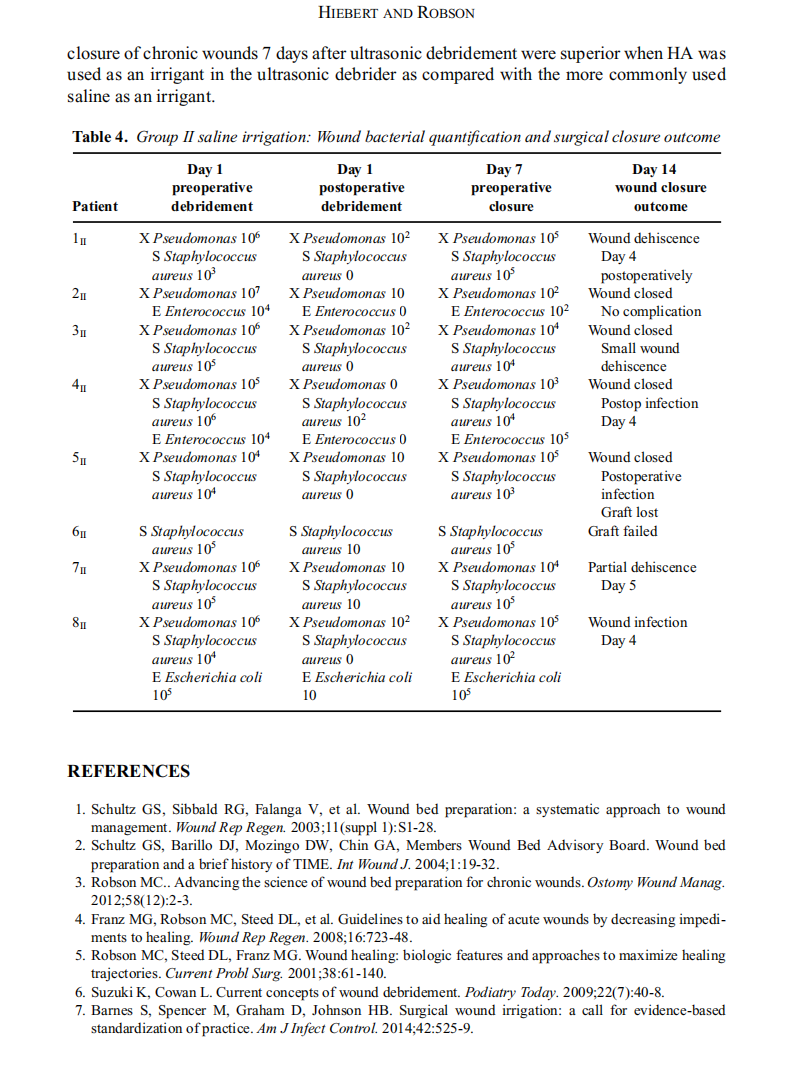
Methods: Seventeen consenting adult patients with chronic open wounds were randomly selected for study. The patients were randomly divided into the hypochlorous acid irrigation or saline irrigation group. All patients provided pre- and postoperative tissue samples for qualitative and quantitative bacteriology. For the time (7 days) between the debridement procedure and the definitive closure procedure, the wounds were dressed with a silver-impregnated dressing and a hydroconductive dressing. Results: Both types of irrigation in the ultrasonic system initially lowered the bacterial counts by 4 to 6 logs. However, by the time of definitive closure, the saline-irrigated wounds had bacterial counts back up to 105 whereas the hypochlorous acid–irrigated wounds remained at 102 or fewer. More than 80% of patients in the saline group had postoperative closure failure compared with 25% of patients in the hypochlorous acid group.
Conclusions: Hypochlorous acid irrigation with ultrasound debridement reduced bacterial growth in chronic open wounds more efficiently than saline alone. Postoperative wound closure outcomes suggest a remarkable reduction in wound complications after wound debridement using hypochlorous acid irrigation with ultrasound versus saline
本文转载于ePlasty VOLUME 16 ,不代表本网站赞同其观点和对其真实性负责,我们只作于阅读分享,非商业用途,如若侵权,请告知删除。