本文转载于 Clinical, Cosmetic and Investigational Dermatology 2024:17 1853–1861 ,不代表本网站赞同其观点和对其真实性负责,我们只作于阅读分享,非商业用途,如若侵权,请告知删除。
Dita Mutiara Irawan 1 , Ronny Lesmana2–4 , Edhyana Sahiratmadja 4
1Graduate School of Master Program in Anti Aging and Aesthetic Medicine, Faculty of Medicine, Universitas Padjadjaran,Jatinangor, 45363, Indonesia;2Center of Excellence in Higher Education for Pharmaceutical Care Innovation, Universitas Padjadjaran, Jatinangor, 45363, Indonesia; 3Division of Biological Activity, Central Laboratory, Universitas Padjadjaran, Sumedang, 45363, Indonesia; 4Department of Biomedical Science, Faculty of Medicine, Universitas Padjadjaran, Sumedang, 45363, Indonesia
Correspondence: Dita Mutiara Irawan, Email 该Email地址已收到反垃圾邮件插件保护。要显示它您需要在浏览器中启用JavaScript。
Background: People who suffered type 2 diabetes have impaired healing of wounds due to the large number of circulating inflammatory cells resulting from high blood sugar levels. The wound healing process involves various complex processes including
the degradation of extracellular matrix, a process characterized by an increase in matrix metalloproteinase-9 (MMP-9). Conventional management of diabetic wounds usually involves systemic blood sugar control and topical antimicrobial treatment, including hydrogen peroxide and povidone-iodine, which are known to be cytotoxic to the cells involved in the wound healing cascade. Finding a safe, non-toxic, and effecting wound cleansing still poses a challenge, and hypochlorous acid (HOCl) could act as a potential candidate.
Purpose: Unveiling an HOCl ion as an agent for diabetic wound management and MMP-9 as a marker for delayed diabetic wound
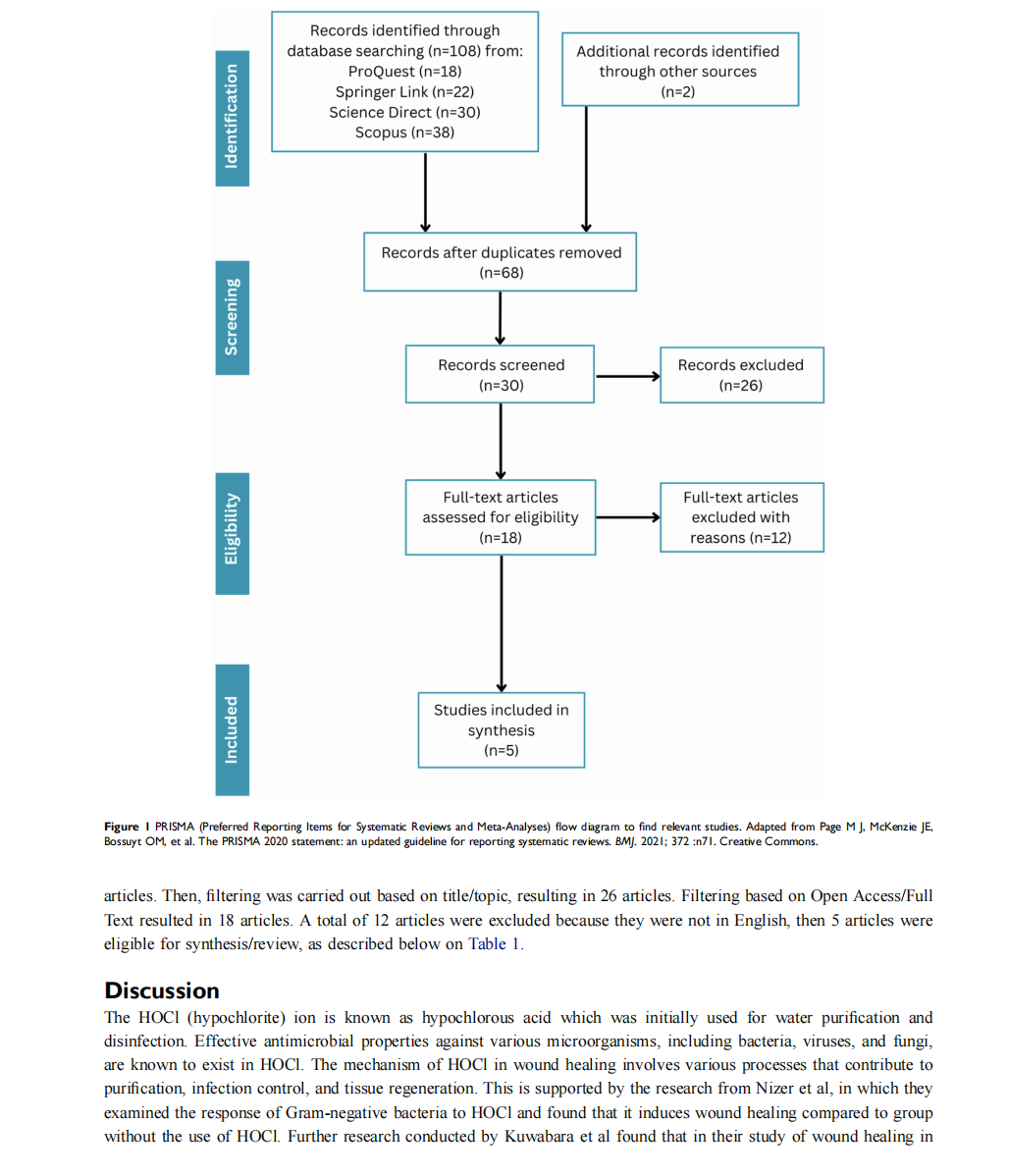
Methods: The Preferred Reporting Items for Systematic Reviews and Meta-Analyses (PRISMA) Flow Diagram is used to find and select related, eligible literatures for the review. The authors used several databases such as Pro Quest, Scopus, Springer link and
Science Direct. In addition, and to expand the data, the database on Google Scholar was also opened. Then, the compiled data are analyzed to form results and discussions to the research question.
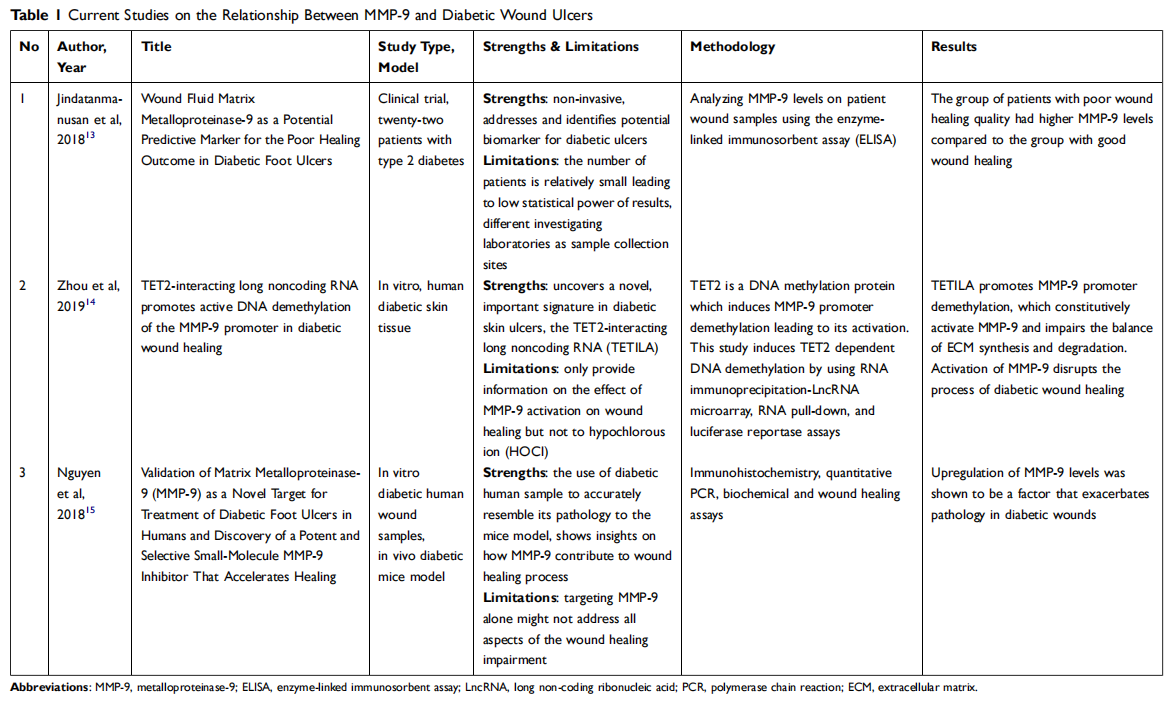
Results: Five eligible articles passed the inclusion criteria and reviewed for data synthesis. From 5 pieces of literature, it was found that the use of HOCl ions can be a good choice of topical agent in the management of diabetic wounds and decrease the activity of
MMP-9, which act as a marker for delayed healing of diabetic wounds.
Conclusion: Topical agent, in this case HOCl ion, shows good results and can be used as an option in the management of diabetic wounds and MMP-9 can be used as a predictive marker in the management of diabetic wounds.
Keywords: diabetic wound, HOCl ion, hypochlorite acid, MMP-9, wound healing
本文转载于 Clinical, Cosmetic and Investigational Dermatology 2024:17 1853–1861 ,不代表本网站赞同其观点和对其真实性负责,我们只作于阅读分享,非商业用途,如若侵权,请告知删除。