本文转载于Frontiers in Microbiology ,不代表本网站赞同其观点和对其真实性负责,我们只作于阅读分享,非商业用途,如若侵权,请告知删除。
Julian-Dario Rembe1*†, Lioba Huelsboemer2†, Isabell Plattfaut2, Manuela Besser2 and Ewa K. Stuermer3
1Department of Vascular and Endovascular Surgery, University Hospital Düsseldorf, Heinrich-Heine-University of Düsseldorf, Düsseldorf, Germany,2Chair for Translational Wound Research, Centre for Biomedical Education and Research, Witten/Herdecke University, Witten, Germany, 3Department of Vascular Medicine, University Heart and Vascular Center Hamburg, Translational Wound Research, University Medical Centre Hamburg-Eppendorf, Hamburg, Germany
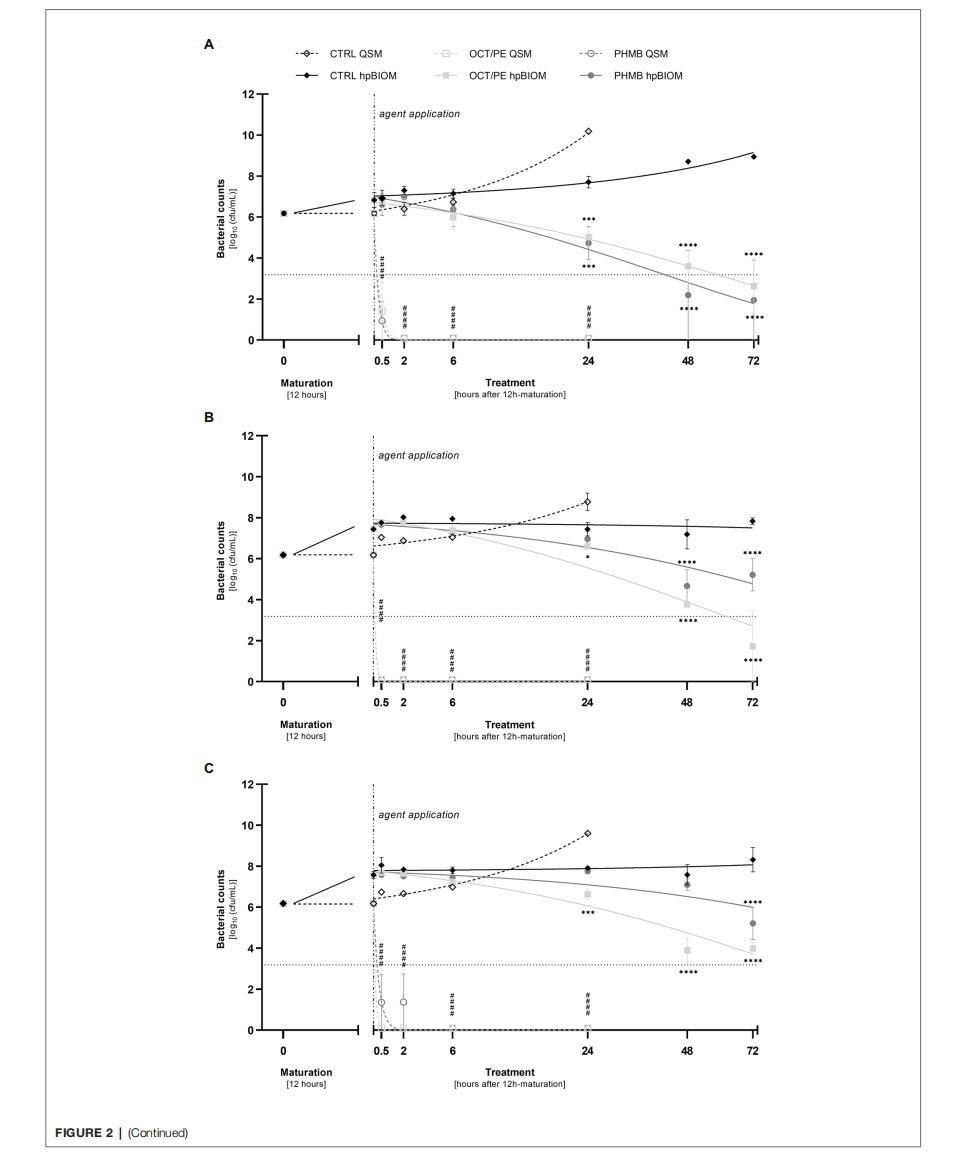
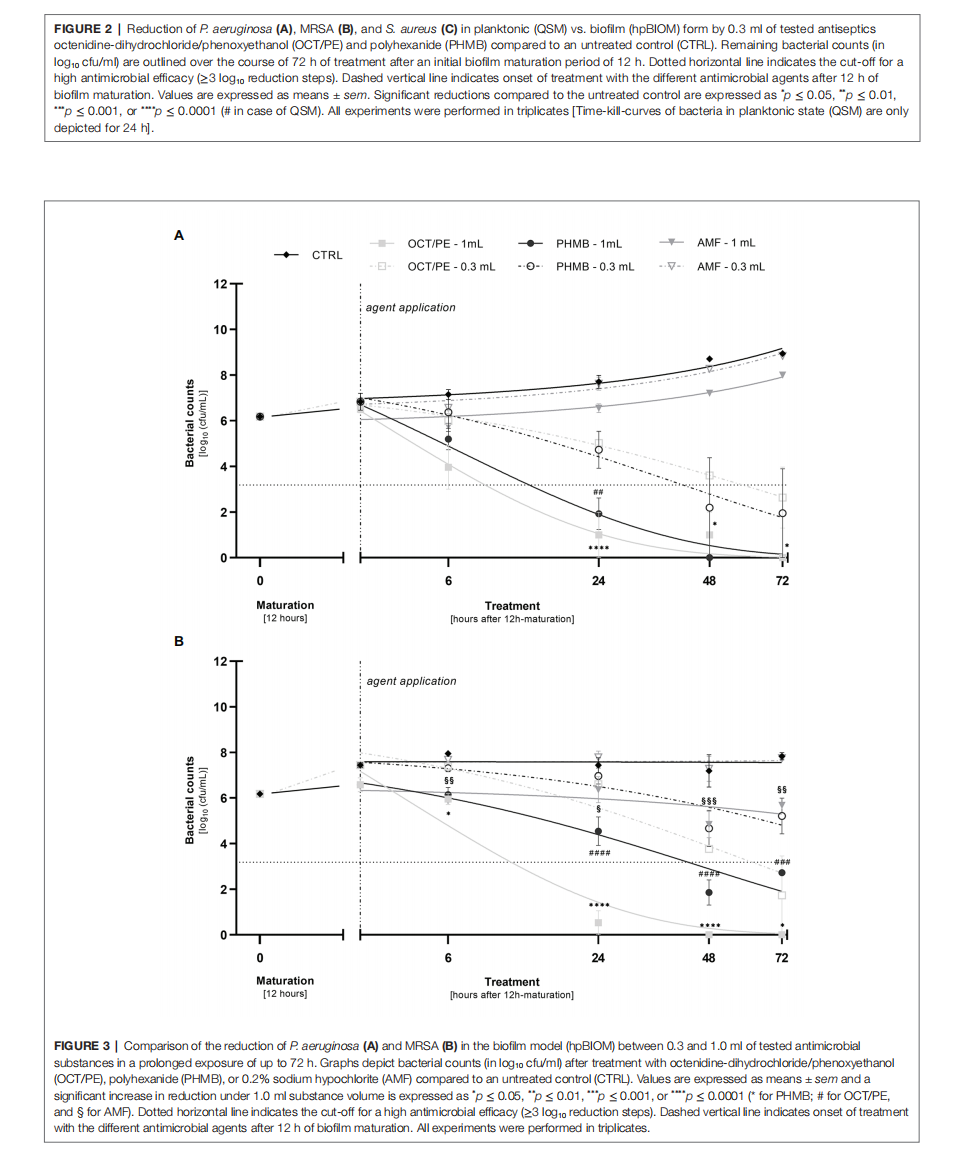
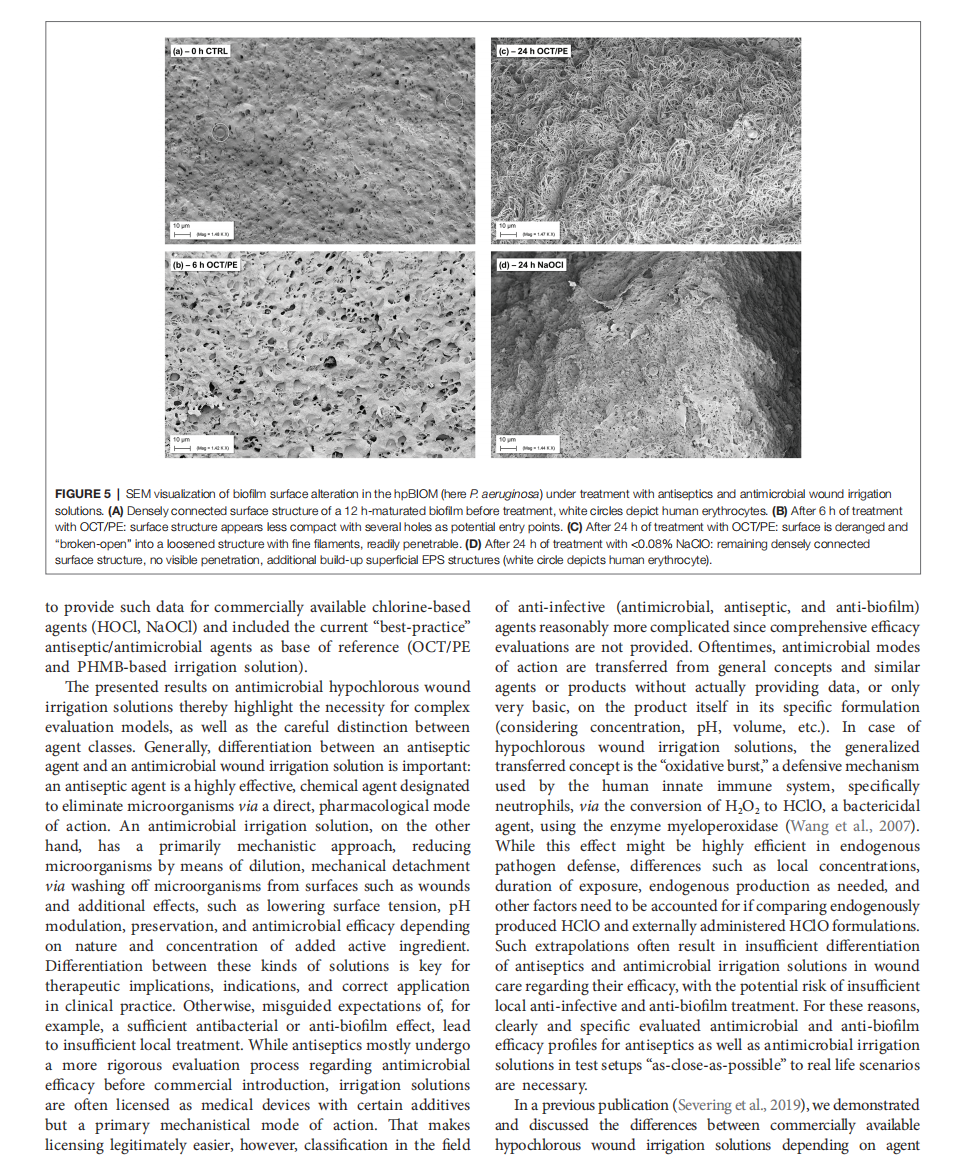
Biofilms pose a relevant factor for wound healing impairment in chronic wounds.With 78% of all chronic wounds being affected by biofilms, research in this area is of high priority, especially since data for evidence-based selection of appropriate antimicrobials and antiseptics is scarce.Therefore,the objective of this study was to evaluate the anti-biofilm efficacy of commercially available hypochlorous wound irrigation solutions compared to established antimicrobials.Using an innovative complex in-vitro human plasma biofilm model(hpBIOM),quantitative reduction of Pseudomonas aeruginosa,Staphylococcus aureus,and Methicillin-resistant S. aureus (MRSA) biofilms by three hypochlorous irrigation solutions[two polyhexanide (PHMB)irrigation solution and 0.1%octenidine-dihydrochloride/phenoxyethanol(OCT/PE).Efficacy was compared to a non-challenged planktonic approach,as well as with increased substance volume over a prolonged exposure (up to 72 h).Qualitative visualization of biofilms was performed by scanning electron microscopy (SEM). Both reference agents(OCT/PE and PHMB)induced significant biofilm reductions within 72 h,whereby high volume OCT/PE even managed complete eradication of P. aeruginosa and MRSA biofilms after72 h.The tested hypochlorous wound irrigation solutions achieved no relevant penetration and eradication of biofilms despite increased volume and exposure. Only 0.2% NaClO managed a low reduction under prolonged exposure.The results demonstrate that low-dosed hypochlorous wound irrigation solutions are significantly less effective than PHMB-based irrigation solution and OCT/PE, thus unsuitable for biofilm eradication on their own. The used complex hpBIOM thereby mimics the highly challenging clinical wound microenvironment, providing a more profound base for future clinical translation.
Keywords: wound infection, biofilm, antimicrobial, antiseptic, hypochlorous acid, human plasma bioflm model, wound irrigation, chronic wound
本文转载于Frontiers in Microbiology ,不代表本网站赞同其观点和对其真实性负责,我们只作于阅读分享,非商业用途,如若侵权,请告知删除。