本文转载于 Journal of Pediatric Urology (2022) 18, 362.e1e362.e8 ,不代表本网站赞同其观点和对其真实性负责,我们只作于阅读分享,非商业用途,如若侵权,请告知删除。
Glenda M. Beaman a,b, Adrian S. Woolf c,d, Filipa M. Lopes c, Shuang Andrew Guo e,f,g, J. Robert Harkness a,b, Raimondo M. Cervellione d, David Keene d, Imran Mushtaq h, Menna R. Clatworthy f,g,h, William G. Newman a,b,*
Summary
Introduction
Bladder exstrophyeepispadias complex (BEEC) comprises a spectrum of anterior midline congenital malformations, involving the lower urinary tract. BEEC is usually sporadic, but families with more than one affected member have been reported, and a twin concordance study supported a genetic contribution to pathogenesis. Moreover, diverse chromosomal aberrations have been reported in a small subset of individuals with BEEC. The commonest are 22q11.2 microduplications, identified in approximately 3% of BEEC index cases.
Objectives
We aimed to refine the chromosome 22q11.2 locus, and to determine whether the encompassed genes are expressed in normal developing and mature human urinary bladders.
Results
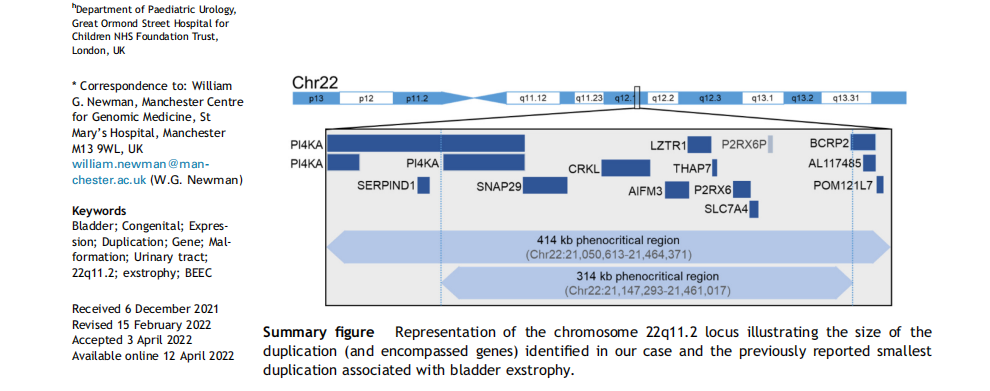
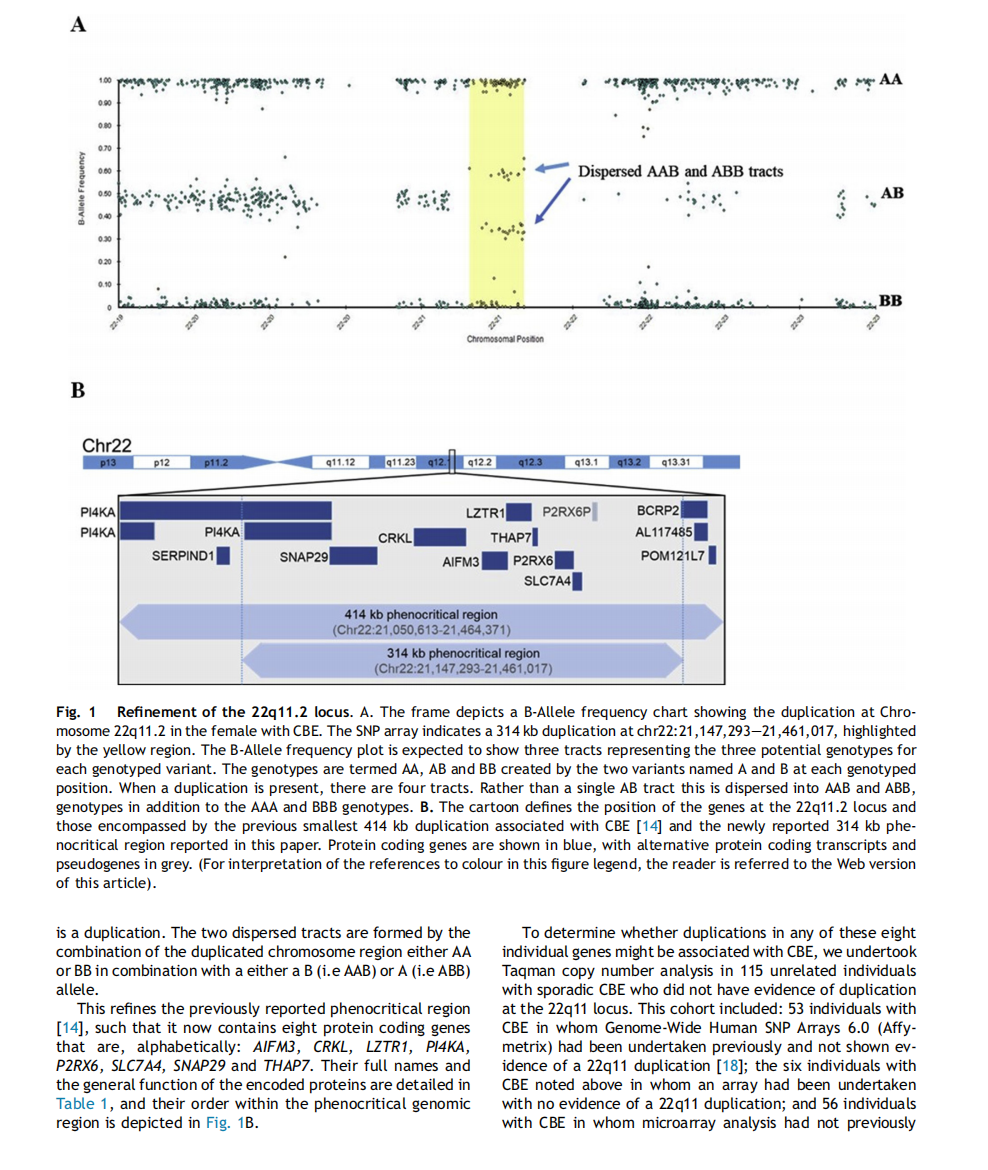
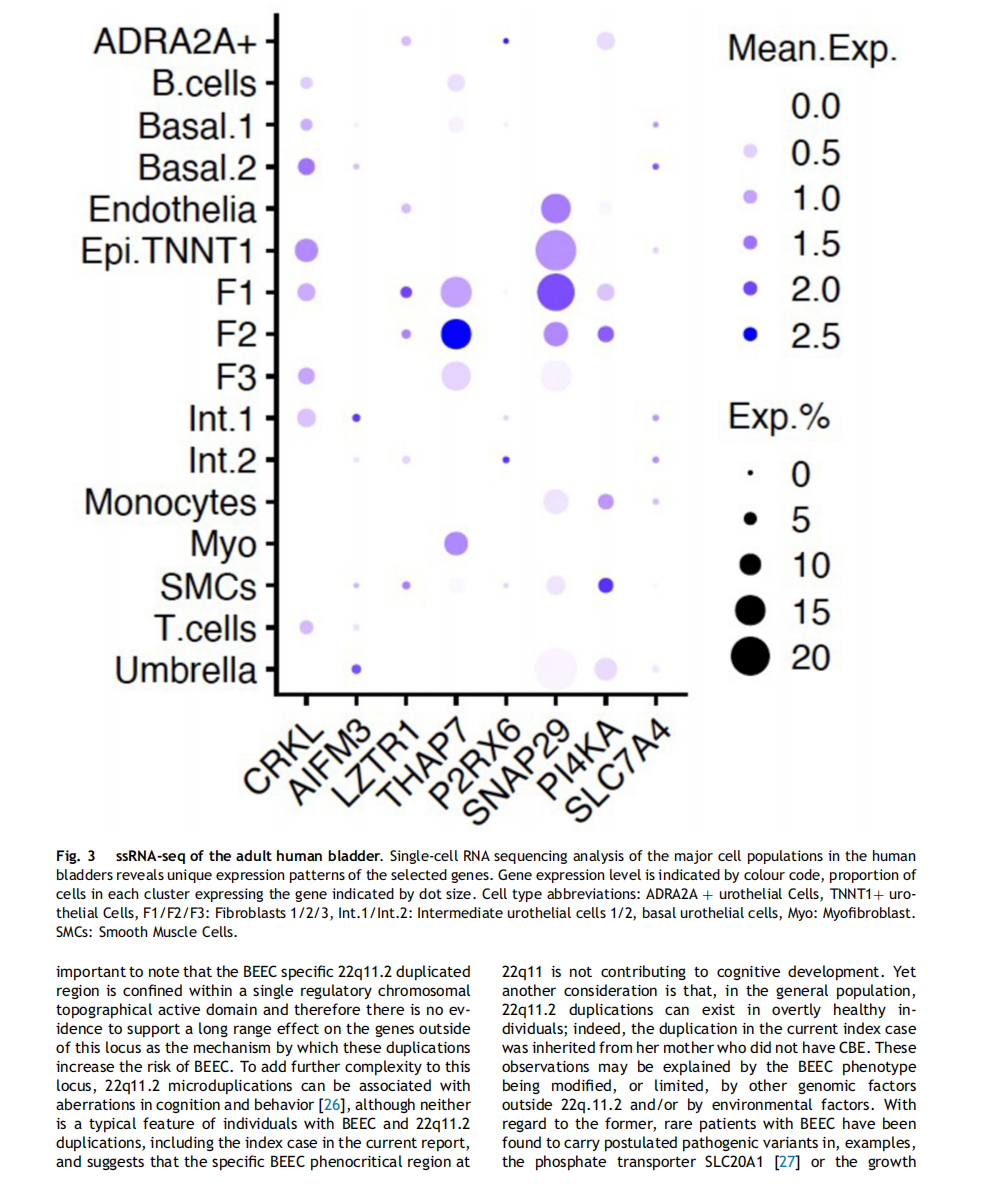
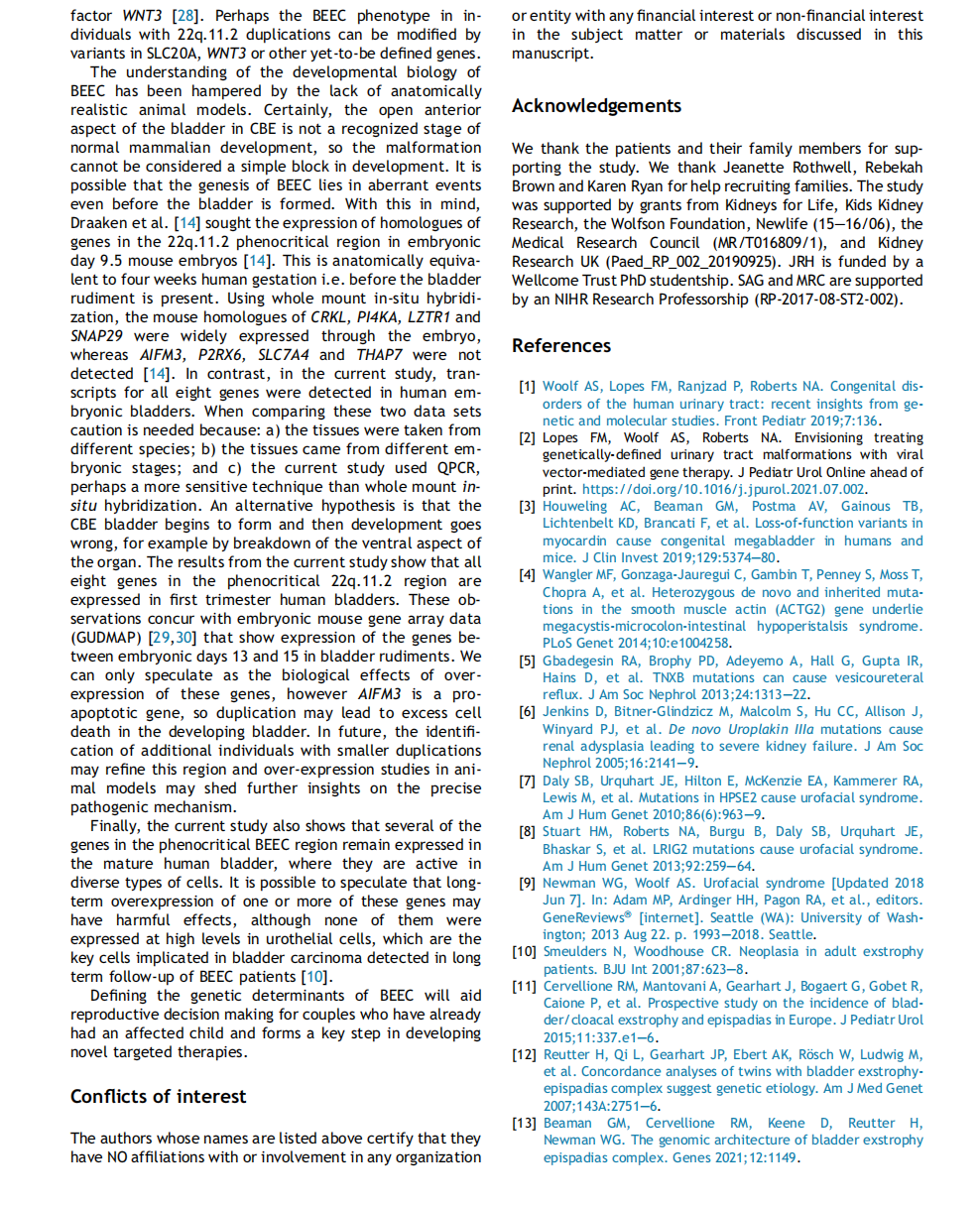
Using DNA from an individual with CBE, the 22q11.2 duplicated locus was refined by identification of a maternally inherited 314 kb duplication (chr22:21,147,293e21,461,017), as depicted in this image. Moreover, the eight protein coding genes within the locus were found to be expressed during normal developing and mature bladders. To determine whether duplications in any of these individual genes were associated with CBE, we undertook copy number analyses in 115 individuals with CBE without duplications of the whole locus. No duplications of individual genes were found.
Discussion
The current study has refined the22q11.2locus associated with BEEC and has shown that the eight protein coding genes are expressed in human bladders both during antenatal development and postnatally. Nevertheless, the precise biological explanation as to why duplication of the phenocritical region of22q11 confers increased susceptibility to BEEC remains to be determined. The fact that individuals with CBE without duplications of the whole locus also lacked duplication of any of the individual genes suggests that in individuals with BEEC and duplication of the 22q11.2 locus altered dosage of more than one gene may be important in BEEC etiology.
Conclusions
The study has refined the 22q11.2 locus associated with BEEC and has shown that the eight protein coding genes within this locus are expressed in human bladders.
本文转载于 Journal of Pediatric Urology (2022) 18, 362.e1e362.e8 ,不代表本网站赞同其观点和对其真实性负责,我们只作于阅读分享,非商业用途,如若侵权,请告知删除。