



This article is excerpted from the Scientific Reports | (2025) 15:1633 by Wound World.

Xinjue Kuang1,2, Caini Lin1,2, Yuanyuan Fu3, YuhuiWang3, JunhuaGong3, Yong Chen3,4, Youting Liu3,4,6 & FanYi1,2,5
1 Key Laboratory of Cosmetic, China National Light Industry, Beijing Technology and Business University, Beijing,China.
2Institute of Cosmetic Regulatory Science, Beijing Technology and Business University, Beijing, China.
3 Beijing Uproven Medical Technology Co. LTD, Beijing, China.
4 Beijing Uproven Institute of Dermatology, Beijing,China.
5 Beijing Technology and Business University, No.11/33, Fucheng Road, Haidian District, Beijing 100048,China.
6 Beijing Uproven Institute of Dermatology, Room 1109, 11th Floor, Building 13, No. 5 Tianhua Street, Daxing District, Beijing 102600, China. email: 该Email地址已收到反垃圾邮件插件保护。要显示它您需要在浏览器中启用JavaScript。; 该Email地址已收到反垃圾邮件插件保护。要显示它您需要在浏览器中启用JavaScript。
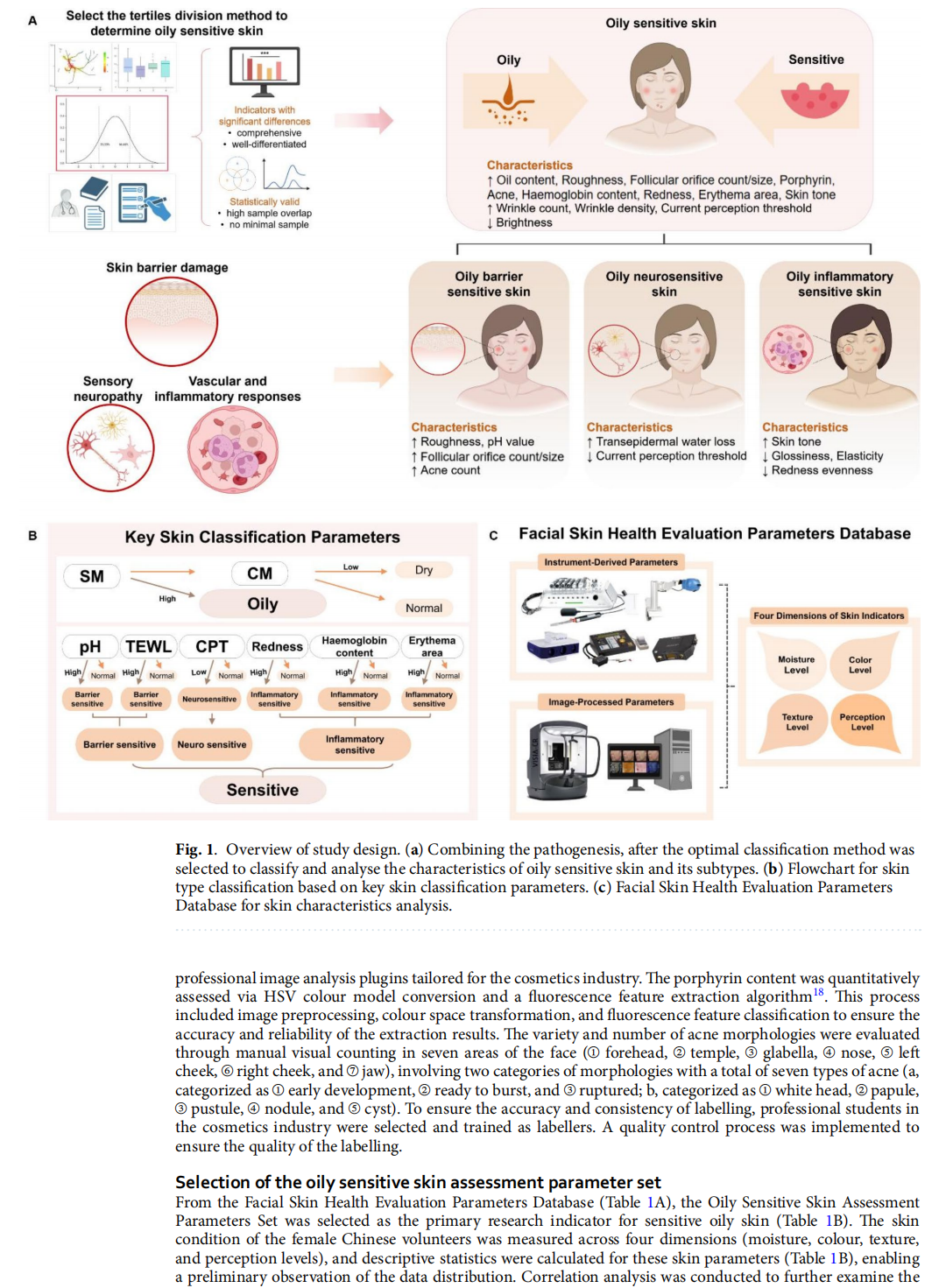
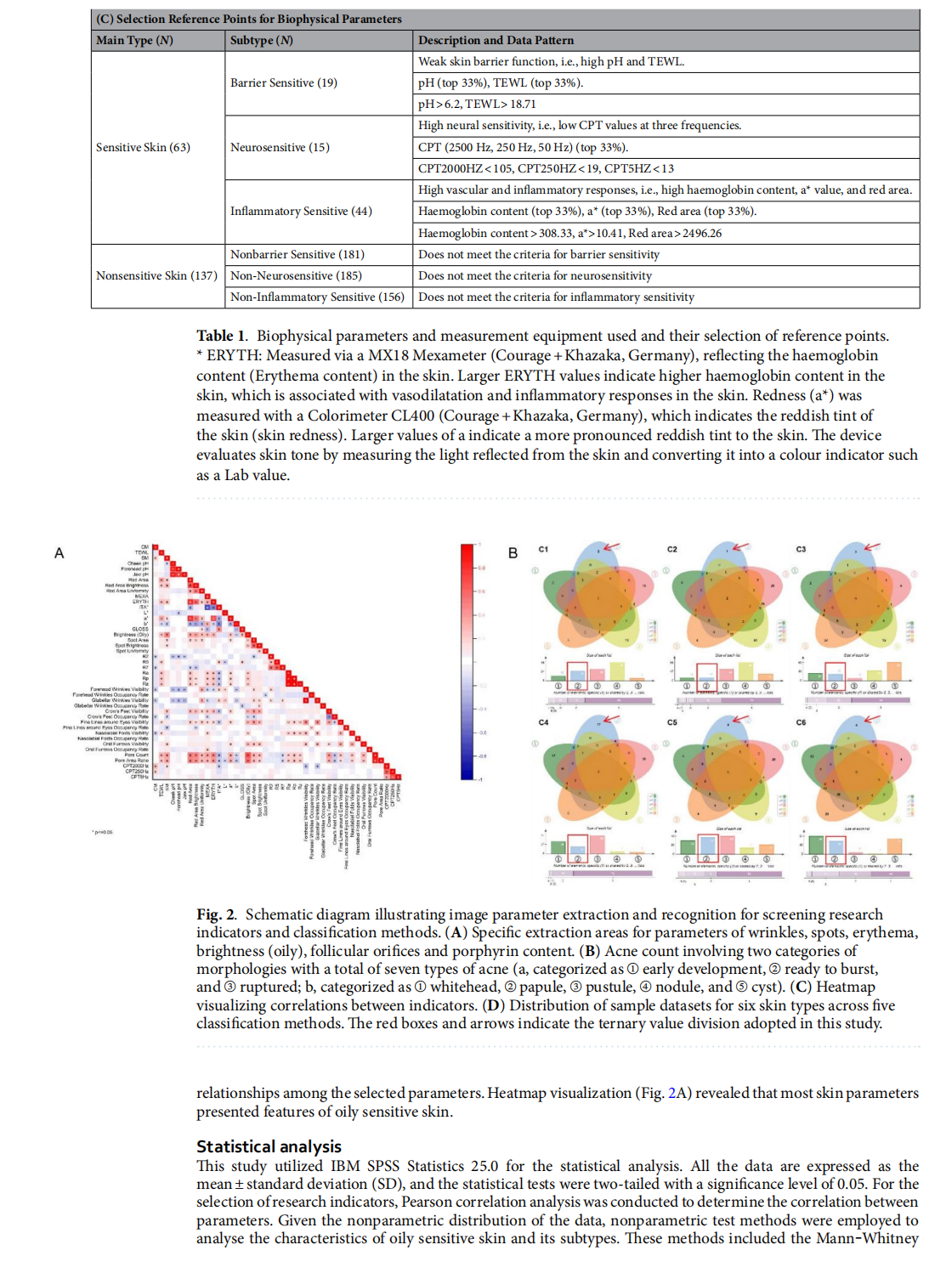
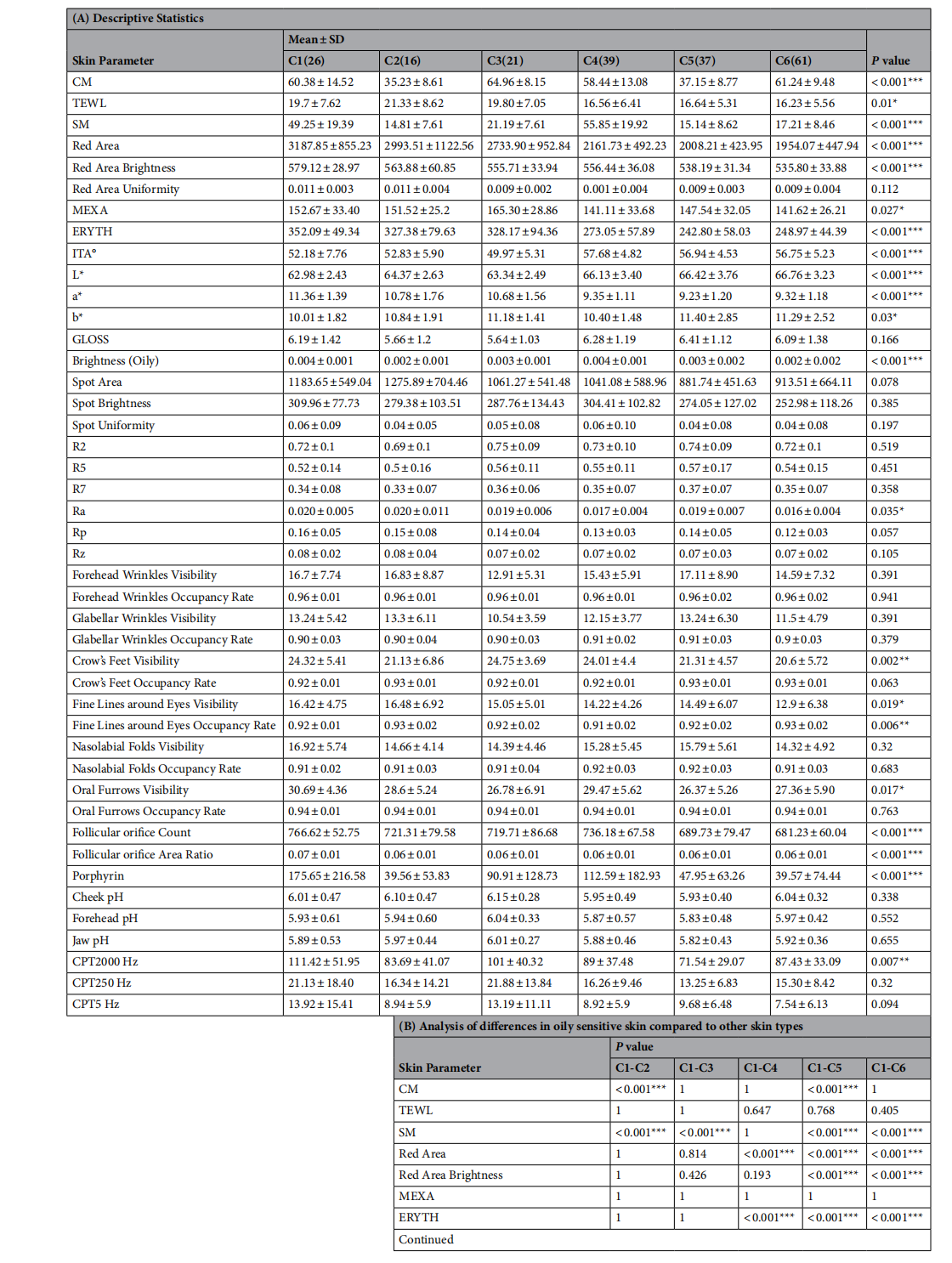
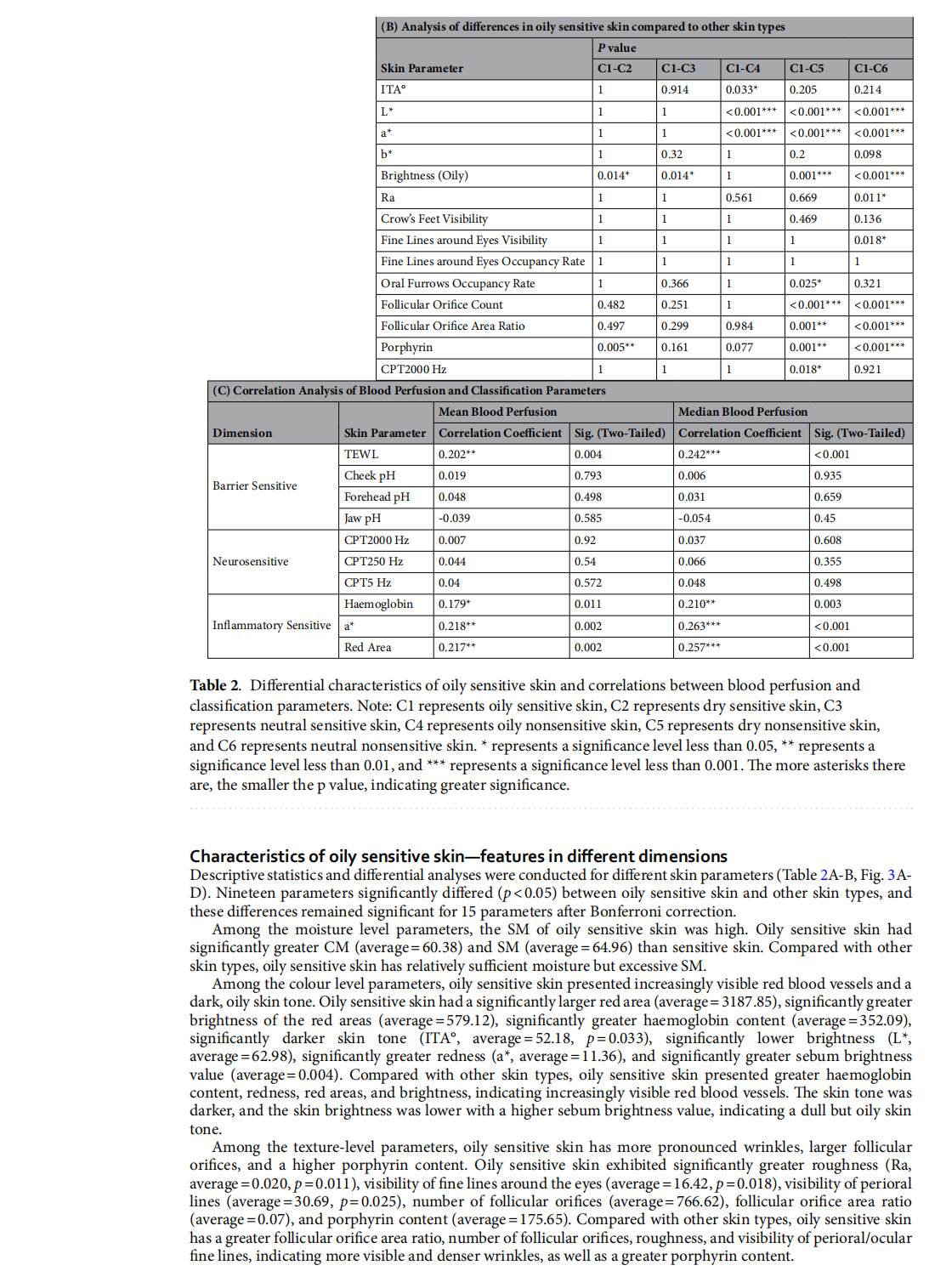
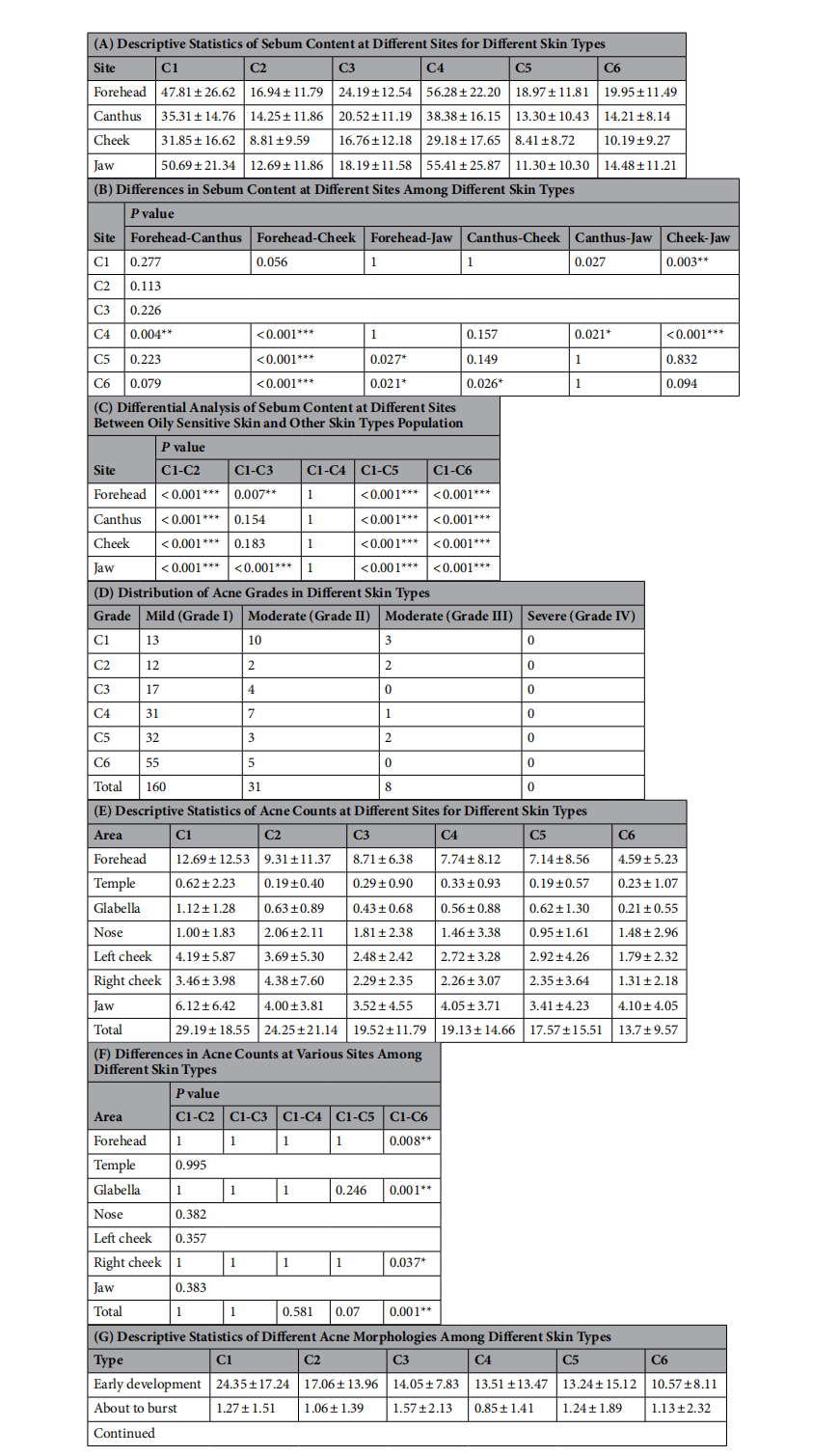
Oily sensitive skin is complex and requires accurate identification and personalized care. However, the current classification method relies on subjective assessment. This study aimed to classify skin type and subtype using objective biophysical parameters to investigate differences in skin characteristics across anatomical and morphological regions. This study involved 200 Chinese women aged 17–34 years. Noninvasive capture of biophysical measures and image analysis yielded 104 parameters. Key classification parameters were identified through mechanisms and characteristics, with thresholds set via statistical methods. This study identified the optimal ternary value classification method for dividing skin types into dry, neutral, and oily types based on tertiles of biophysical parameters and, further, into barrier-sensitive, neurosensitive, and inflammatory-sensitive types. Oily sensitive skin shows increased sebum, follicular orifices, redness, dullness, wrinkles, and porphyrins, along with a tendency for oiliness and early acne. Subtypes exhibited specific characteristics: barrier-sensitive skin was rough with a high pH and prone to acne; neurosensitive skin had increased TEWL (Transepidermal Water Loss) and sensitivity; and inflammatory-sensitive skin exhibited a darker tone, with low elasticity and uneven redness. This study established an objective classification system for skin types and subtypes using noninvasive parameters, clarifying the need for care for oily sensitive skin and supporting personalized skincare.
Keywords Oily sensitive skin, Noninvasive biophysical testing, Skin classification, Sensitivity subtypes, Personalized skincare
This article is excerpted from the Scientific Reports | (2025) 15:1633 by Wound World.