This article is excerpted from the Frontiers in Medicine by Wound World.

Fulin Li1† , Yingrong Mo2† , Xiao Huang1 , Ke Sun1 , Baichuan Li1 and Dong Yin1 *
1 Department of Joint Surgery and Sports Medicine, The People's Hospital of Guangxi Zhuang Autonomous Region, Guangxi Academy of Medical Sciences, Nanning, China, 2Department of Pharmacy, The People's Hospital of Guangxi Zhuang Autonomous Region, Guangxi Academy of Medical Sciences, Nanning, China
EDITED BY
Philip M. Gallagher,
University of Kansas, United States
REVIEWED BY
Elisa Belluzzi, University of Padua, Italy Jianlin Shen, Affiliated Hospital of Putian University, China
*CORRESPONDENCE
Dong Yin 该Email地址已收到反垃圾邮件插件保护。要显示它您需要在浏览器中启用JavaScript。
† These authors have contributed equally to this work
RECEIVED 01 February 2024
ACCEPTED 12 April 2024
PUBLISHED 29 April 2024
CITATION
Li F, Mo Y, Huang X, Sun K, Li B and Yin D (2024) Cyclic cryotherapy with vitamin D facilitates early rehabilitation after total knee arthroplasty.
Front. Med. 11:1380128.
doi: 10.3389/fmed.2024.1380128
COPYRIGHT
© 2024 Li, Mo, Huang, Sun, Li and Yin. This is an open-access article distributed under the terms of the Creative Commons Attribution License (CC BY). The use, distribution or reproduction in other forums is permitted, provided the original author(s) and the copyright owner(s) are credited and that the original publication in this journal is cited, in accordance with accepted academic practice. No use, distribution or reproduction is permitted which does not comply with these terms.
Objective: This study aimed to evaluate the efficacy of cyclic cryotherapy and vitamin D administration on early rehabilitation after total knee arthroplasty (TKA), as its efficacy remains unclear.
Methods: We divided 150 patients (three groups) who underwent TKA into those treated with or without cyclic cryotherapy and vitamin D.
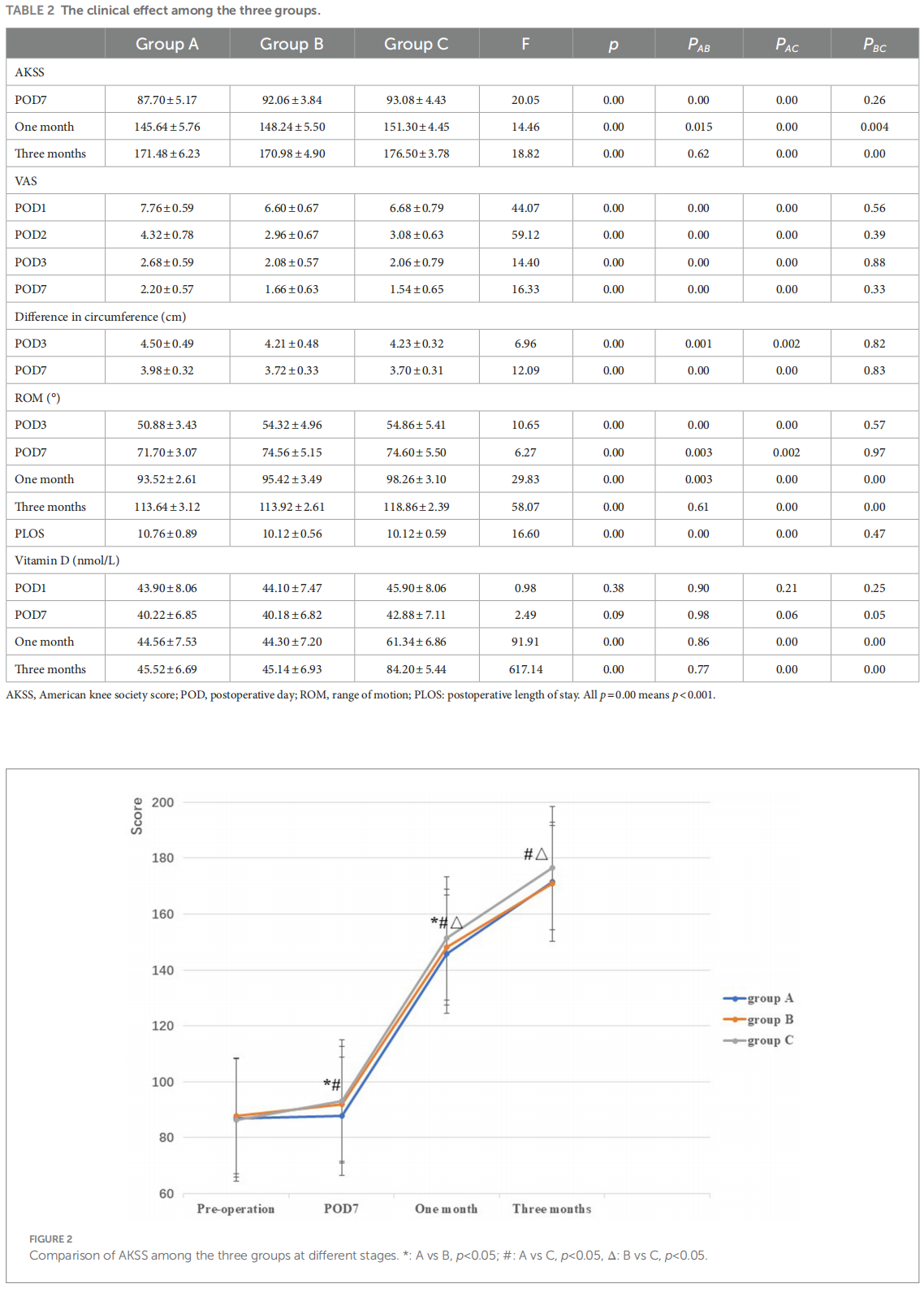
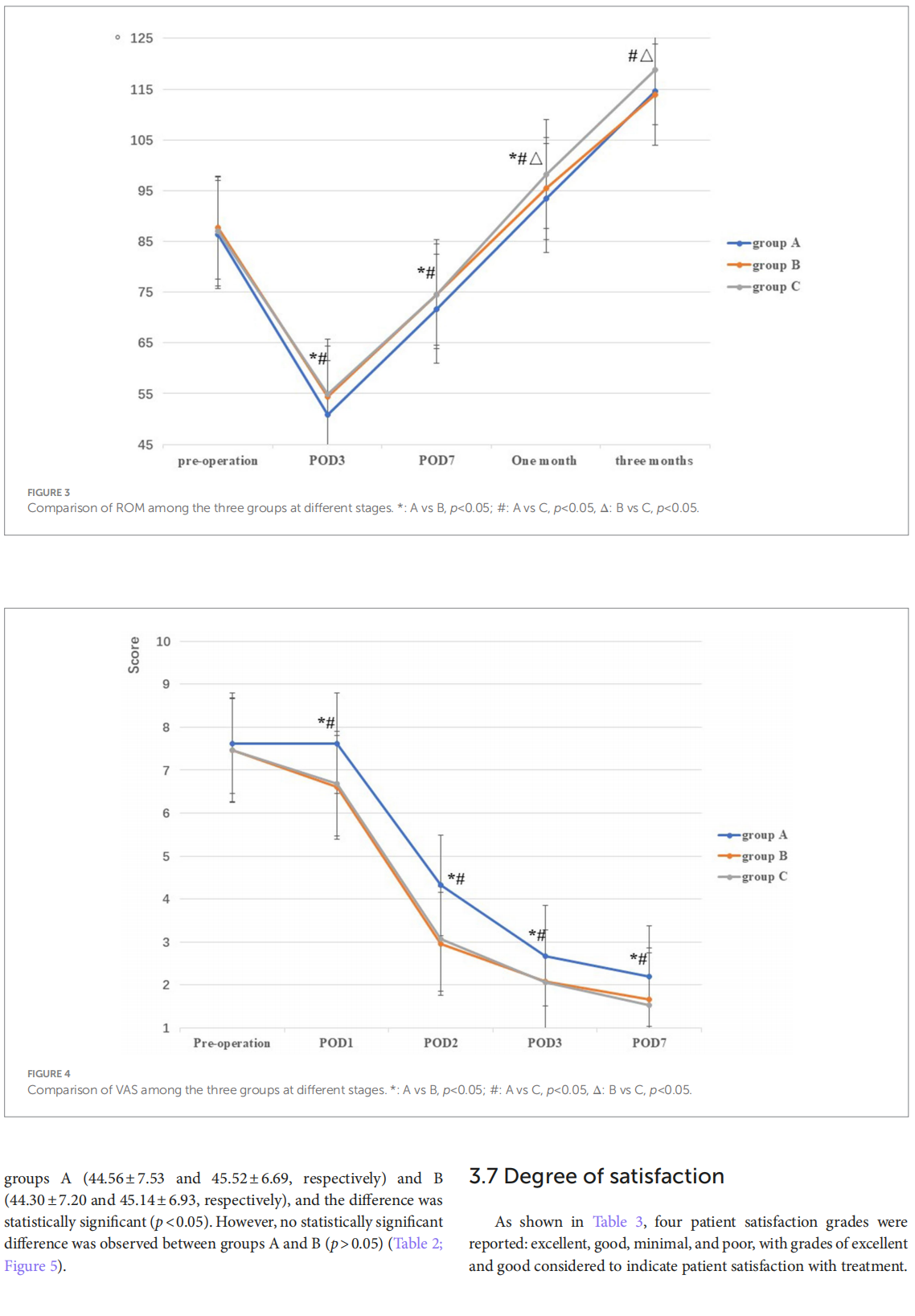
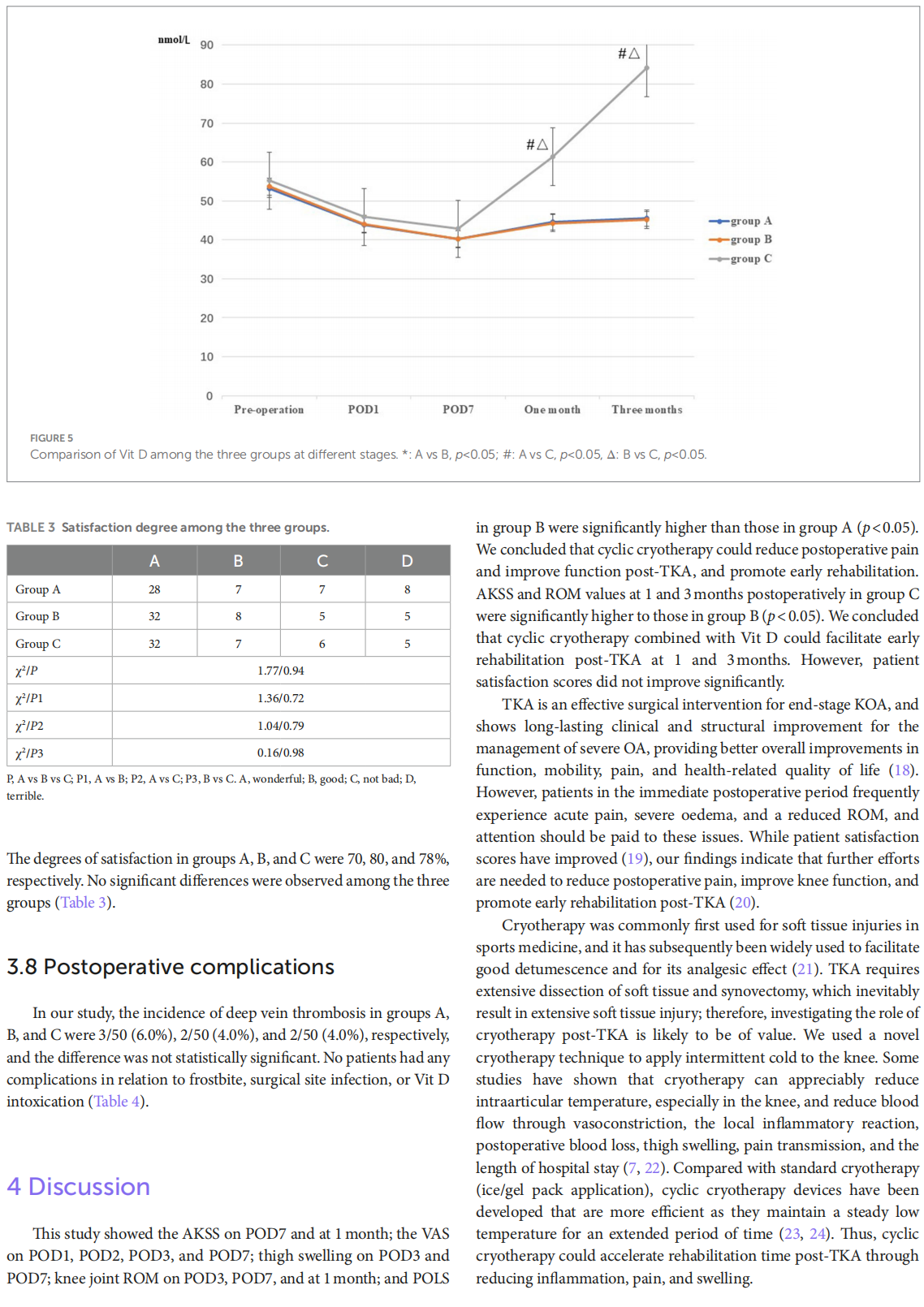
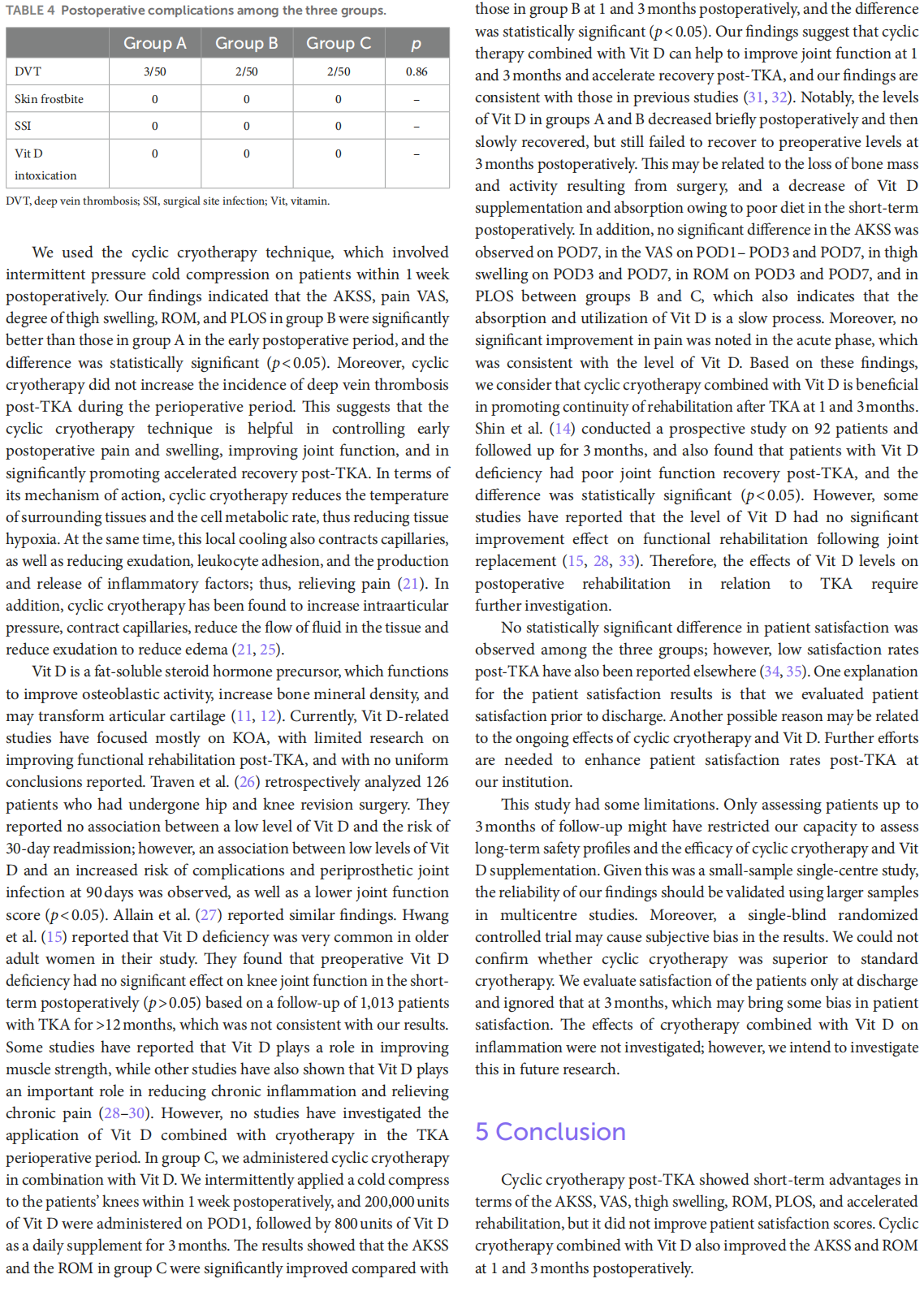
Results: Compared with patients who did not receive cyclic cryotherapy, those who received postoperative cyclic cryotherapy and vitamin D supplementation had significantly higher American Knee Society Scores (AKSS) on postoperative day (POD) 7 and at 1 month postoperatively; higher visual analogue scale (VAS) values on POD1–3 and POD7; reduced thigh swelling on POD3 and POD7; increased range of motion (ROM) on POD3, POD7, and at 1 month postoperatively; and reduced postoperative length of stay (PLOS). However, no significant difference in patient satisfaction was observed between the patient groups. At 1 and 3 months postoperatively, patients administered cyclic cryotherapy and vitamin D had significantly higher AKSS, ROM, and vitamin D levels than those who did not receive vitamin D. No perioperative complications such as surgical site infection, skin frostbite, or vitamin D intoxication were
Conclusion: Cyclic cryotherapy post-TKA had short-term advantages in terms of AKSS, VAS, thigh swelling, ROM, PLOS, and accelerated rehabilitation, but did not improve patient satisfaction. Cyclic cryotherapy combined with vitamin D improved AKSS and ROM at 1 and 3 months postoperatively.
KEYWORDS
vitamin D, cyclic cryotherapy, total knee arthroplasty, rehabilitation, satisfaction
This article is excerpted from the Frontiers in Medicine by Wound World.