
People with diabetes are at increased risk of cardiovascular disease (CVD) due to high glucose levels. This is additional to other risk factors, such as atherogenic lipid profile (high triglycerides, low HDL cholesterol and high levels of small dense LDL particles) and high blood pressure; diabetes doubles the risk of mortality.
Statins are the first-line prescription to reduce cardiovascular events in those with and without diabetes who have high cardiovascular risk or established CVD. Although initially it was believed that pravastatin might reduce the risk of developing type 2 diabetes (Freeman et al, 2001), studies since 2008, including a 2010 meta-analysis (Sattar et al, 2010), have confirmed that statins increase this risk by causing small increases in blood glucose levels. Therefore, we counsel about this small increased risk when initiating statins in those who do not currently have type 2 diabetes.
Questions remain, and the present study by the Cholesterol Treatment Trialists’ Collaboration, published in The Lancet Diabetes & Endocrinology, was designed to clarify the impact of statins on people with and without diabetes, including the impact of different doses and intensities of statins, length of treatment, and how quickly any rise in HbA1c occurs and whether it continues to rise over time.
Study method
The authors analysed individual participant data from 154 664 people enrolled in 23 double-blind, randomised controlled trials, 19 of which compared statins with placebo (21% in people with pre-existing diabetes), with a median follow-up of 4.3 years. Four trials compared less intensive with more intensive statin therapy over a median of 4.9 years (17% with pre-existing diabetes).
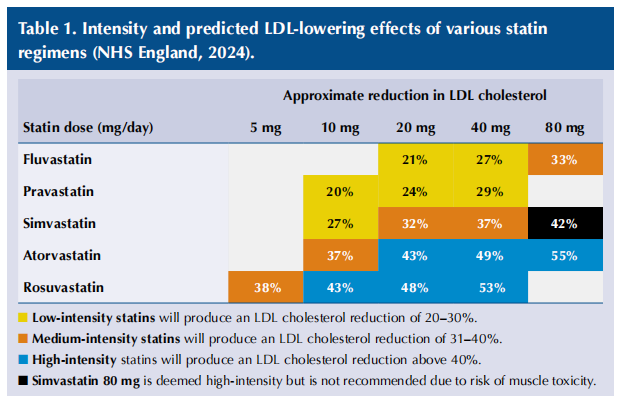
Statins were classified into low-, moderate and high-intensity according to their impact on lowering LDL cholesterol, as illustrated in Table 1 (overleaf). The majority of people with diabetes will be on high-intensity statins (e.g. atorvastatin 20 mg or 40 mg) for primary prevention based on QRISK scores, and on atorvastatin 80 mg for secondary prevention.
Results
Low- or moderate-intensity statin use resulted in a 10% increase in new-onset diabetes, with an incidence of 1.3% per year compared to 1.2% in the placebo group. Those treated with a high intensity statin had a larger, 36% proportional increase in new diabetes, with rates of 4.8% compared to 3.5% per year with placebo. The relative effects on new-onset diabetes were stable over time.
In participants without diabetes:
● Seven trials of statins versus placebo measured mean blood glucose at baseline and follow-up, while two trials measured HbA1c:
➤ Low- or moderate-intensity statins: Mean glucose increase of 0.04 mmol/L; mean HbA1c increase of 0.06%.
➤ High-intensity statins: Mean glucose increase of 0.04 mmol/L; mean HbA1c increase of 0.08%.
● In those with pre-statin glucose measurements available, 62% of those developing new-onset diabetes were in the top quarter of the baseline glycaemia distribution and were already at high risk of developing type 2 diabetes before statin In those with pre-existing diabetes:
● Low- or moderate-intensity statins resulted in a 10% relative increased risk in worsening glycaemia compared with placebo.
● High-intensity statins resulted in a 24% relative worsening of glycaemia compared with placebo.
Adding ezetimibe to statins does not appear to increase diabetes risk more than statins alone, whilst early data on bempedoic acid suggest it may reduce HbA1c and weight by small amounts compared with placebo (Sattar, 2023). Two large studies comparing PCSK9 inhibitors with placebo (evolocumab [FOURIER trial] and alirocumab [ODYSSEY trial]) did not show any increased glycaemia or new-onset diabetes with the active drugs.
In an accompanying comment, Gerstein and Pigeyre (2024) remind us that it is not the new label of diabetes that is important but rather the degree and duration of elevated glucose. Although the diagnostic thresholds for type 2 diabetes are set at a fasting plasma glucose (FPG) level of 7.0 mmol/L or an HbA1c of 48 mmol/mol (6.5%) – these being the levels where retinopathy risk increases – cardiovascular risk increases at lower glycaemia levels: above FPG 5.6 mmol/L and HbA1c 39 mmol/mol (5.7%). Thus, many people without type 2 diabetes are already at elevated risk of CVD. Any increased risk of diabetes or higher glucose should be carefully balanced against the benefits of the drug causing the increase; in this case, statins significantly reduce CVD risk.
As yet, there is no clear mechanism for the increase in glycaemia with statins, although weight gain or changes in muscle mass may contribute (Sattar, 2023), and insulin resistance and gut microbiome dysbiosis may also be involved.
Implications for practice
Confirmation of the increased glycaemia and risk of new type 2 diabetes should not influence our decision to prescribe statins for their beneficial impact on cardiovascular events, as numbers needed to treat are low. Previous studies have demonstrated that 20 people without pre-existing CVD would need to be treated with a statin for 5 years to prevent one cardiovascular event, while the number needed to treat reduces to 10 to prevent one cardiovascular event in those with pre-existing CVD (secondary prevention).
In their supporting comment, Gerstein and Pigeyre (2024) emphasise the decreased absolute annual incidence of life-threatening cardiovascular outcomes with statins in people at high risk, which clearly exceeds the impact of the 0.1–1.3% increased absolute incidence of type 2 diabetes per year caused by statins. The increased cardiovascular risk due to increased glycaemia caused by the statin is already captured in the clinical trials and does little to affect the overall cardiovascular benefit observed.
Those at risk of CVD are often also at risk of type 2 diabetes; therefore, when starting statins, we should counsel about the small increased diabetes risk and remind of the importance of losing weight and increasing activity levels to reduce this risk. This study is likely to result in significant media coverage, possibly resulting in people choosing to discontinue or refuse statins. As clinicians, we have an important role in helping people understand that these small increases in type 2 diabetes risk or worsening glycaemia are more than offset by the benefits of statins in people at significant risk of cardiovascular events.
This study highlights that statin initiation and reviews are excellent opportunities to discuss lifestyle changes to counterbalance the small increases in glycaemia and reduce the risk of developing new type 2 diabetes. Helping people make lifestyle changes, such as reducing ultra-processed food intake, improving quantity and quality of sleep, increasing physical activity, and consuming less salt, will also help reduce their risk of CVD – which is our goal in prescribing the statin in the first place. Let’s make every contact count, and find time to add lifestyle advice into our consultations!