本文转载于Yin et al. BMC Chemistry (2025) 19:25,不代表本网站赞同其观点和对其真实性负责,我们只作于阅读分享,非商业用途,如若侵权,请告知删除。
Tingting Yin1 , Qiaowen Li2 , Huan Sun3 , Jin Zheng4 , Yuanyuan Wang5 , Yi Luo6 and Li Wang7*
Abstract
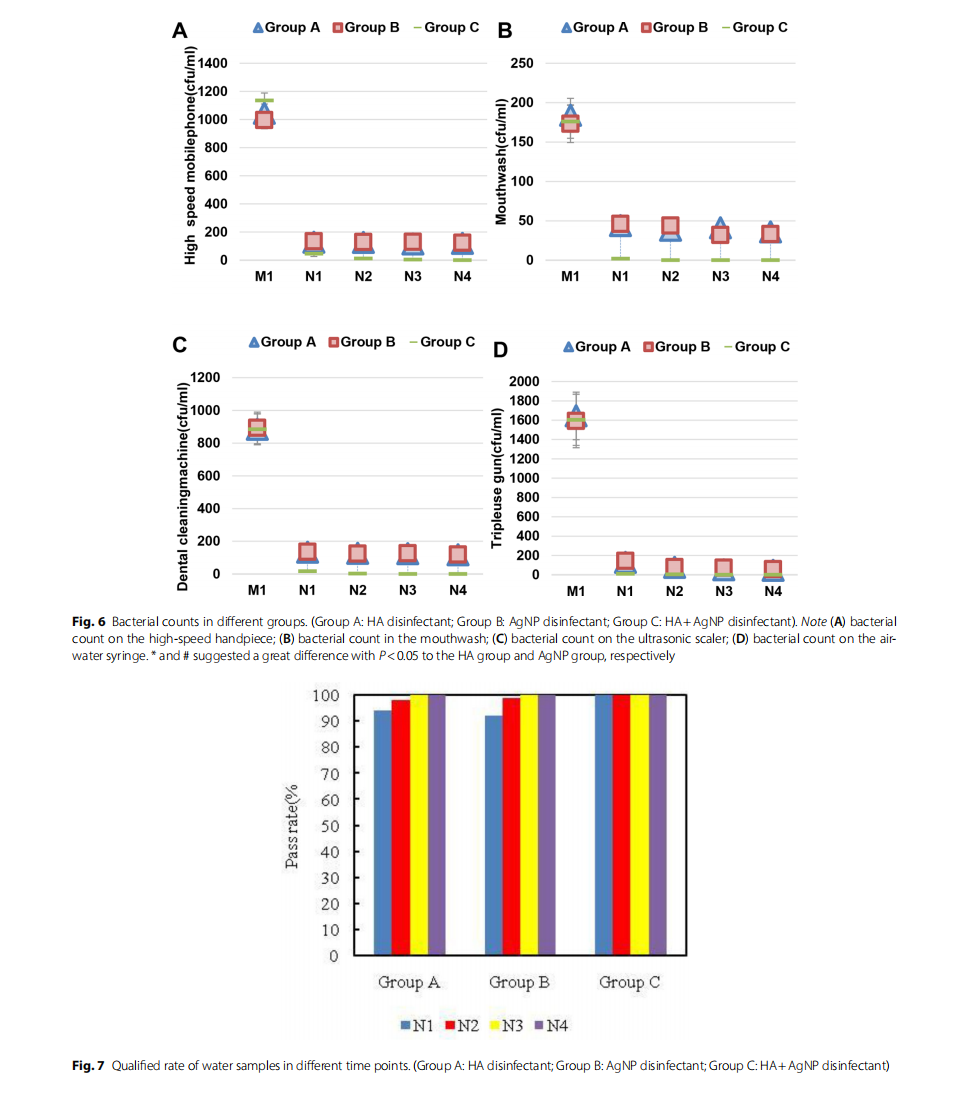
Background This work intended to assess the disinfection efficacy of hypochlorous acid (HA) and silver nanoparticles (AgNP) disinfectants in disinfecting the dental unit waterlines (DUWL) during comprehensive oral treatment and explore their potential applications in the oral medical environment. Methods: Firstly, AgNP solution was prepared and evaluated through X-ray diffraction (XRD), field emission transmission electron microscope (FE-TEM), and stability tests. Subsequently, 15 dental units were selected and randomly assigned to three groups, each receiving a different disinfection method. Specifically, one group (5 units) received HA disinfectant (HA group), one group (5 units) received AgNP disinfectant (AgNP group), and another group (5 units) received a combination of HA and AgNP disinfectant (HA+AgNP group). Bacterial counts before and after disinfection were compared and analyzed at four sites on the dental units: high-speed handpiece tubing, mouthwash, ultrasonic scaler, and three-way syringe.
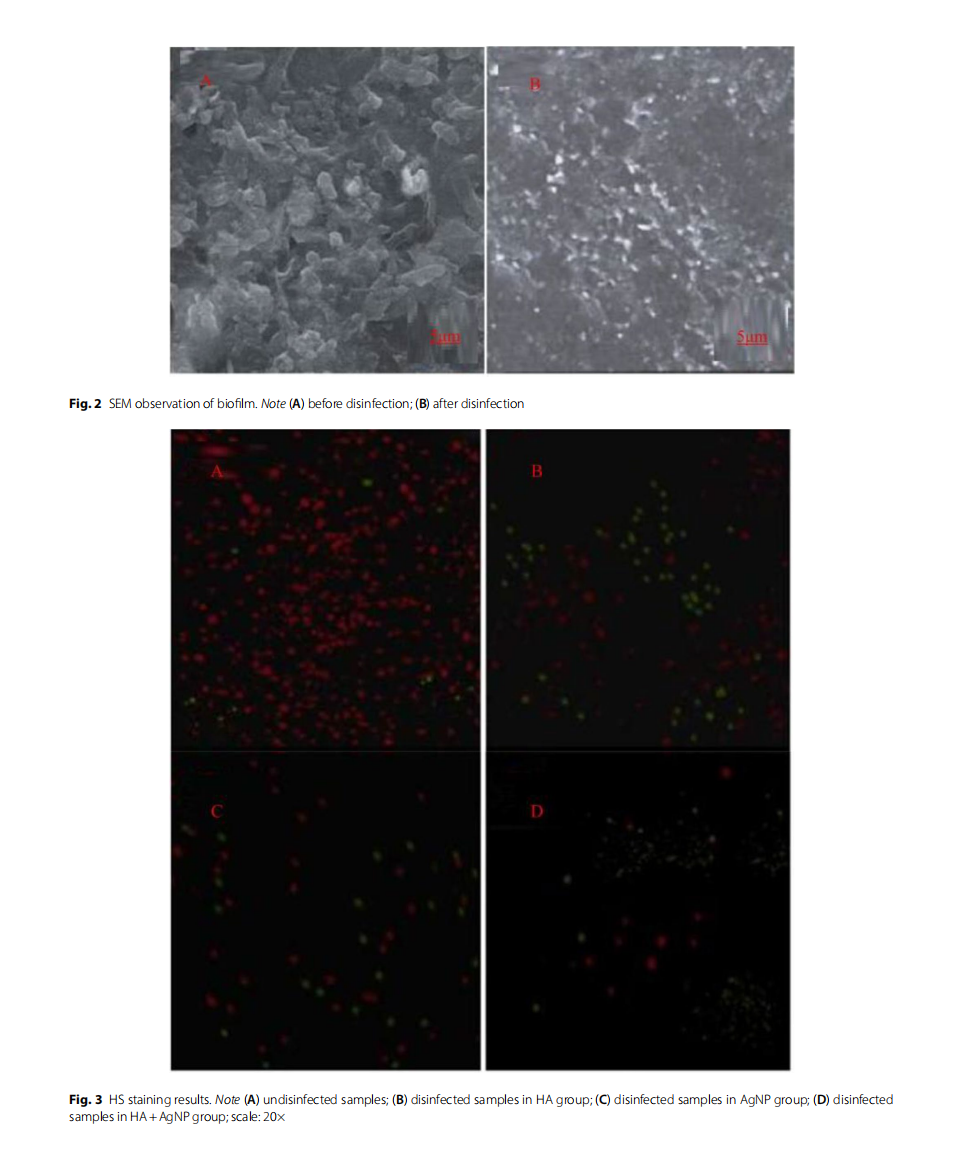
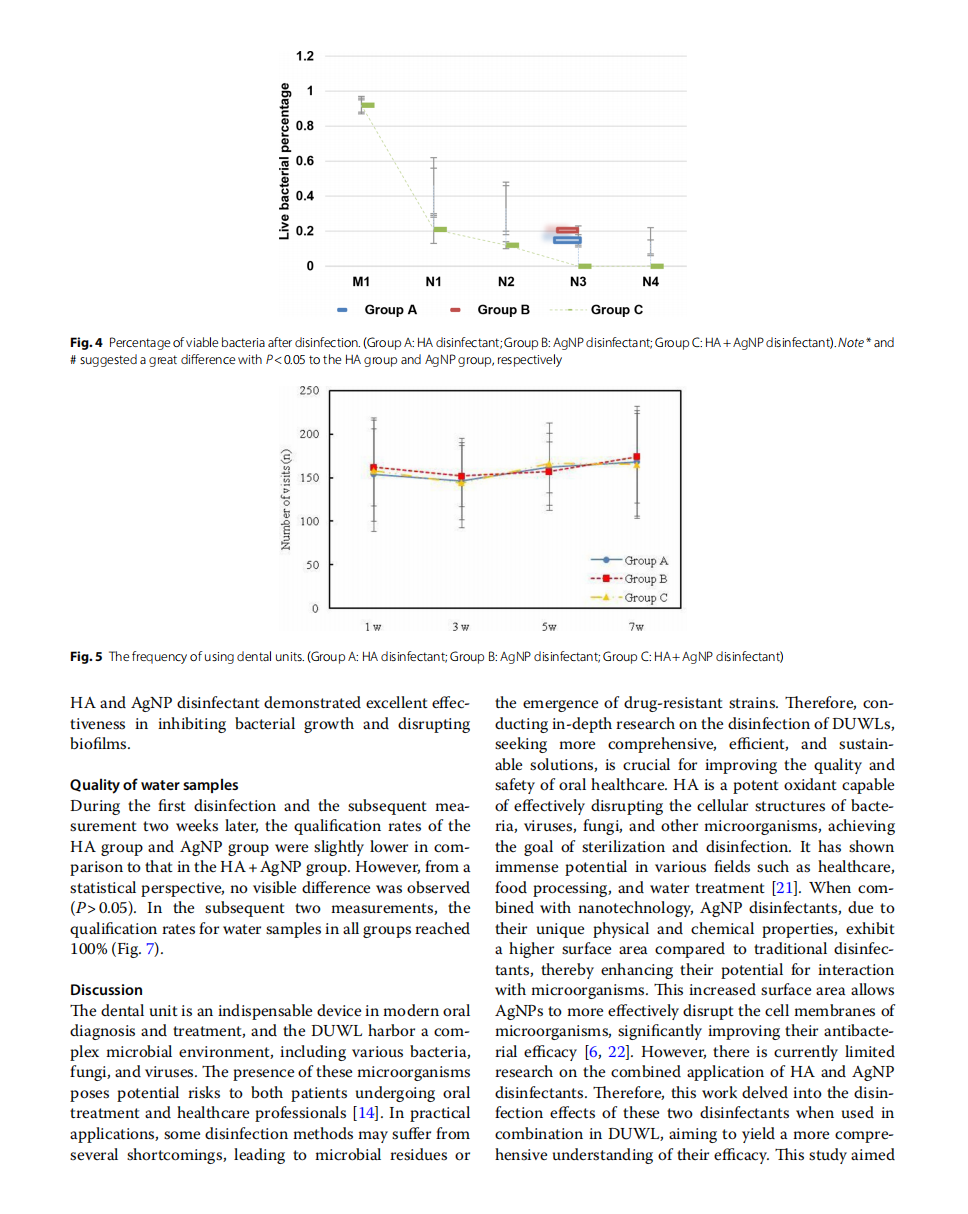
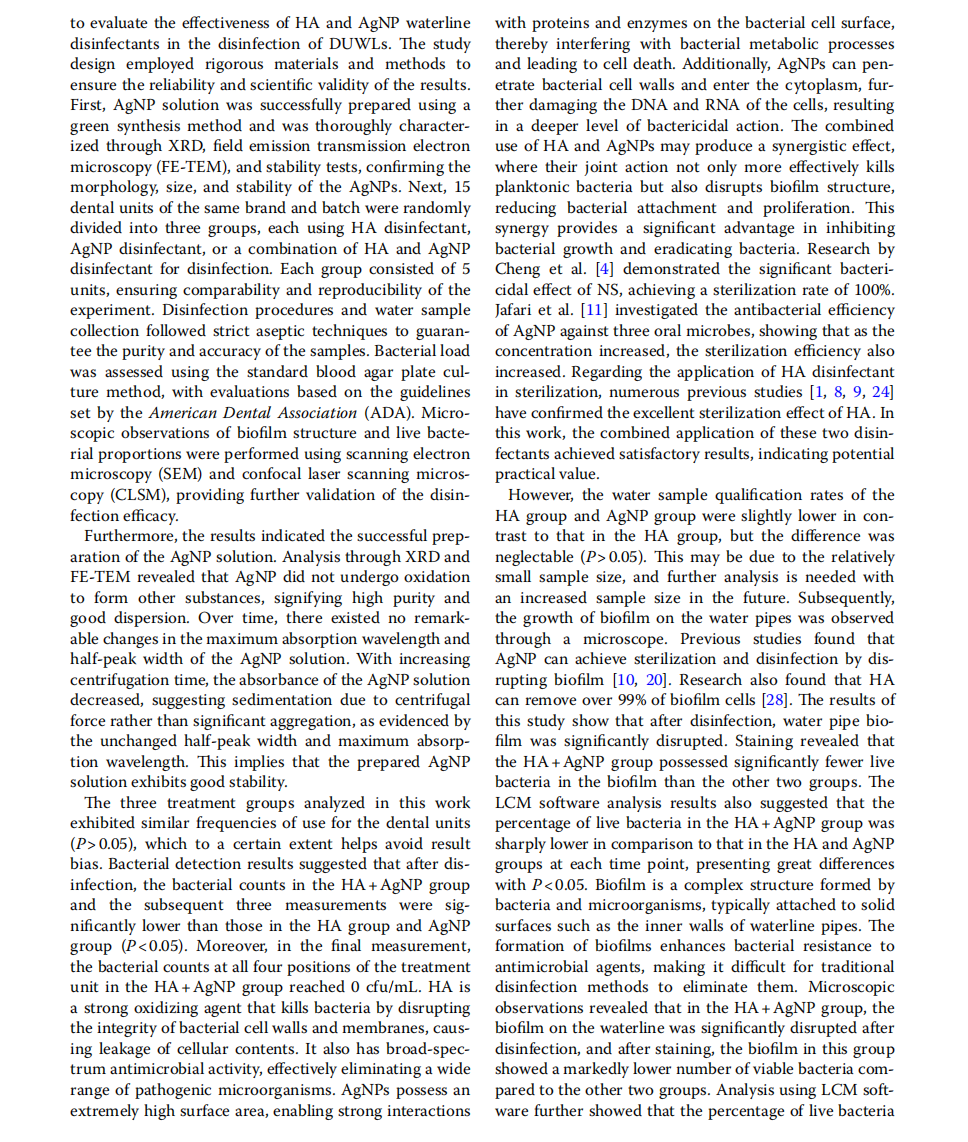
Results The growth of biofilm on the waterlines was observed using scanning electron microscopy (SEM) and laser confocal microscopy (LCM). The results indicated that AgNP solution was successfully prepared and demonstrated excellent stability. There was no significant difference in the average weekly number of patients treated across the three groups (P>0.05). After disinfection, bacterial counts were significantly reduced in all groups. Compared to the HA and AgNP groups, the HA+AgNP group exhibited a markedly lower bacterial count, with statistical significance (P<0.05). The compliance rates observed during the first disinfection and two weeks post-disinfection were slightly lower in the HA and AgNP groups compared to the HA+AgNP group, although no significant statistical difference was found (P>0.05). SEM images revealed uneven biofilm plaques on the inner surface of the pipes prior to disinfection, embedded within a dense matrix, while the biofilm was visibly disrupted post-disinfection. LCM software analysis showed that, compared to the HA and AgNP groups, the HA+AgNP group had a significantly lower percentage of live bacteria on the biofilm post-disinfection (P<0.05).
Conclusion Compared to any single disinfectant regimen, the combined use of HA and AgNPs effectively inhibited bacterial growth and exerted a significant destructive effect on biofilms. Therefore, this combination is expected to be a viable option for disinfection of DUWL in the oral healthcare setting.
Clinical trial number Not applicable.
Keywords Dentistry, Therapeutics, Waterline disinfectant, Hypochlorous acid, Silver nanoparticles
本文转载于Yin et al. BMC Chemistry (2025) 19:25,不代表本网站赞同其观点和对其真实性负责,我们只作于阅读分享,非商业用途,如若侵权,请告知删除。