本文转载于PRS Global Open • 2020,不代表本网站赞同其观点和对其真实性负责,我们只作于阅读分享,非商业用途,如若侵权,请告知删除。
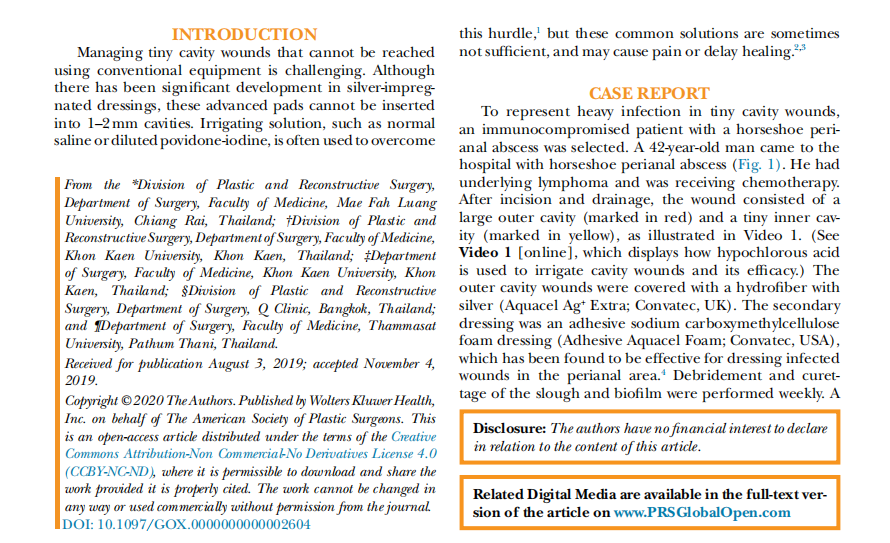
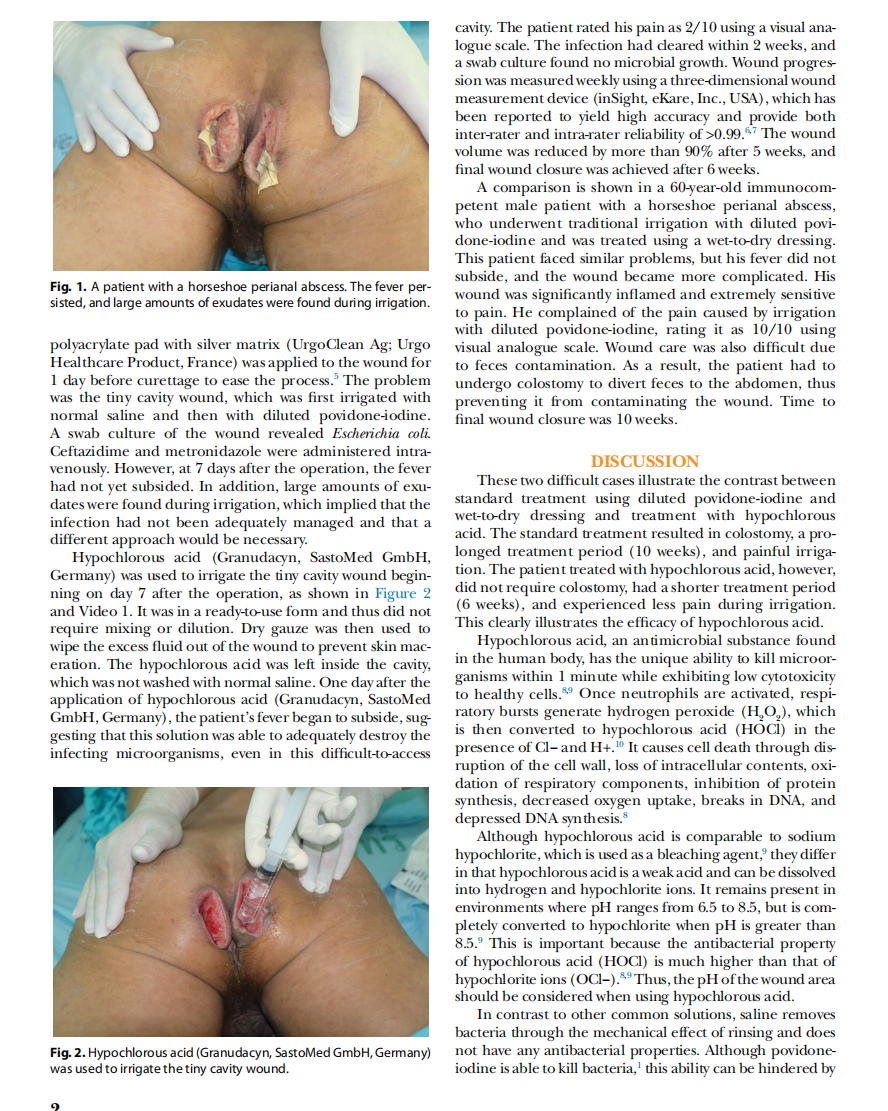
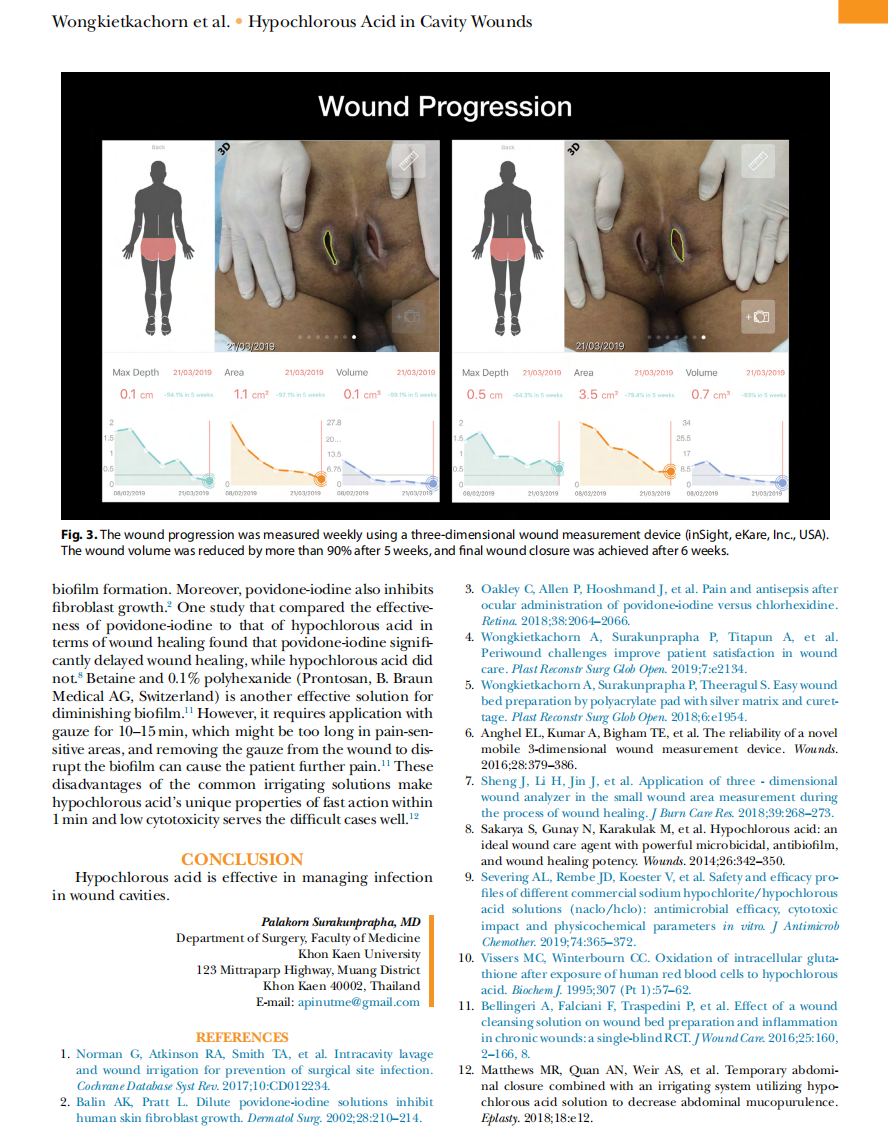
Summary: Managing cavity wounds that cannot be cleaned using standard irrigating solution is challenging. An immunocompromised patient with a horseshoe perianal abscess was selected to represent a heavy infection in cavity wounds. Diluted povidone-iodine was initially used to lavage the wounds, but the fever persisted and the irrigation was painful. Hypochlorous acid was then used to irrigate the wound. One day after administration of the hypochlorous acid, the fever began to subside, suggesting that this solution was able to adequately destroy the infecting microorganisms. The patient rated his pain during this procedure as 2/10. The infection had cleared within 2 weeks, and a swab culture found no microbial growth. The wound volume was reduced by more than 90% after 5 weeks, and final wound closure was achieved after 6 weeks. By comparison, another patient with a horseshoe perianal abscess who underwent traditional irrigation with diluted povidone-iodine and wet-to-dry dressing faced similar problems, but the fever in this case did not subside, and the wound became more complicated. He complained of pain during the irrigation with diluted povidone-iodine, giving the procedure a pain score of 10/10. Wound care was also difficult due to fecal contamination. As a result, the patient had to undergo colostomy to divert feces to the abdomen, thus preventing it from contaminating the wound. Time to final wound closure was 10 weeks. These cases illustrate the effectiveness of hypochlorous acid in dealing with infection in wound cavities. (Plast Reconstr Surg Glob Open 2020;8:e2604; doi: 10.1097/GOX.0000000000002604; Published online 24 January 2020.)
本文转载于PRS Global Open • 2020,不代表本网站赞同其观点和对其真实性负责,我们只作于阅读分享,非商业用途,如若侵权,请告知删除。