本文转载于ePlasty,不代表本网站赞同其观点和对其真实性负责,我们只作于阅读分享,非商业用途,如若侵权,请告知删除。
Eric Clayman, MD; Zackery Beauchamp, BS; Jared Troy, MD
Abstract
Background. Orthopedic hardware infections often require hardware removal or replacement. In some situations, hardware removal is not possible or would require amputation. Thus, a method of in-situ hardware salvage could significantly improve patient outcomes. Hypochlorous acid is a broad-spectrum antimicrobial solution with rapid effectiveness in biofilm impairment.
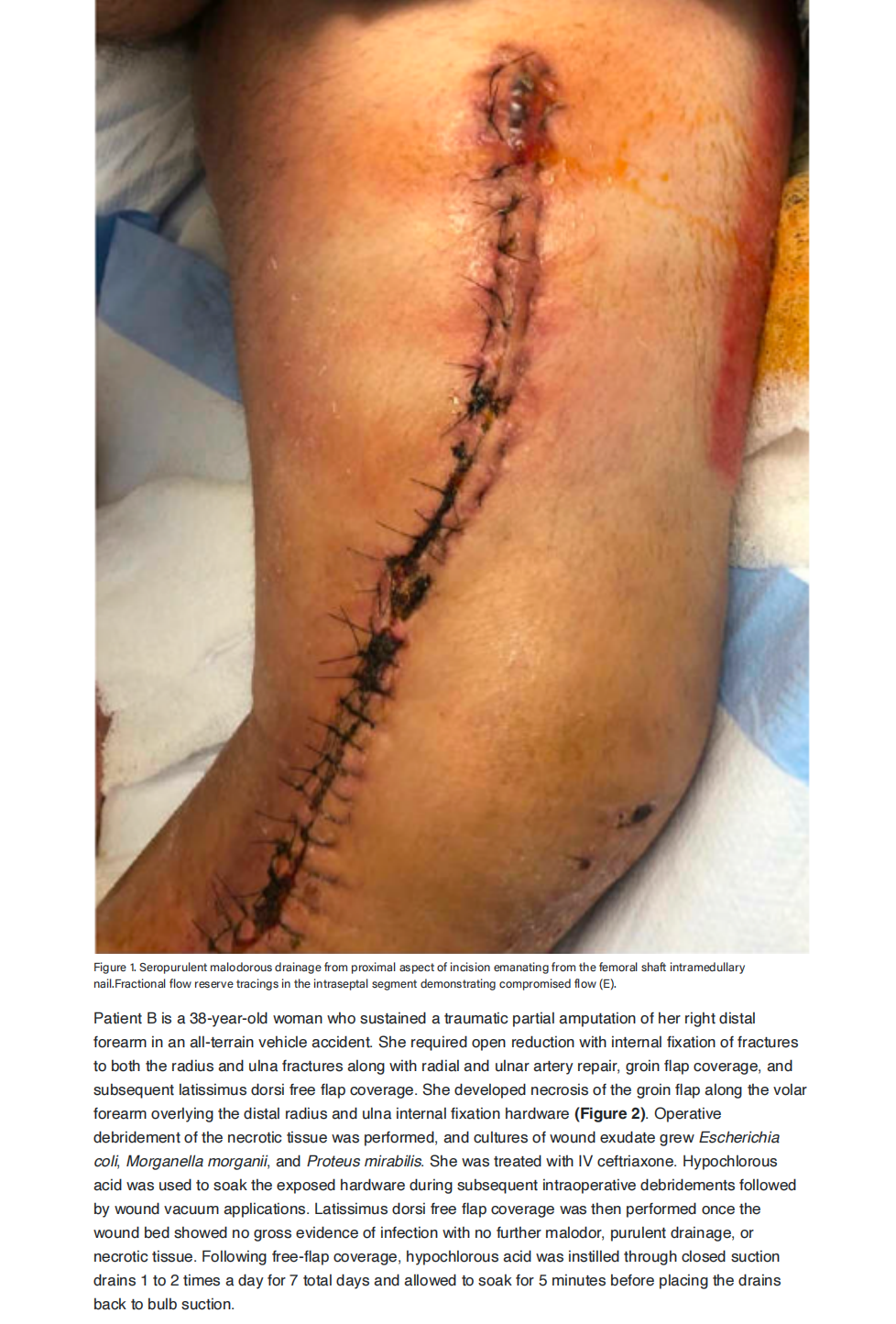
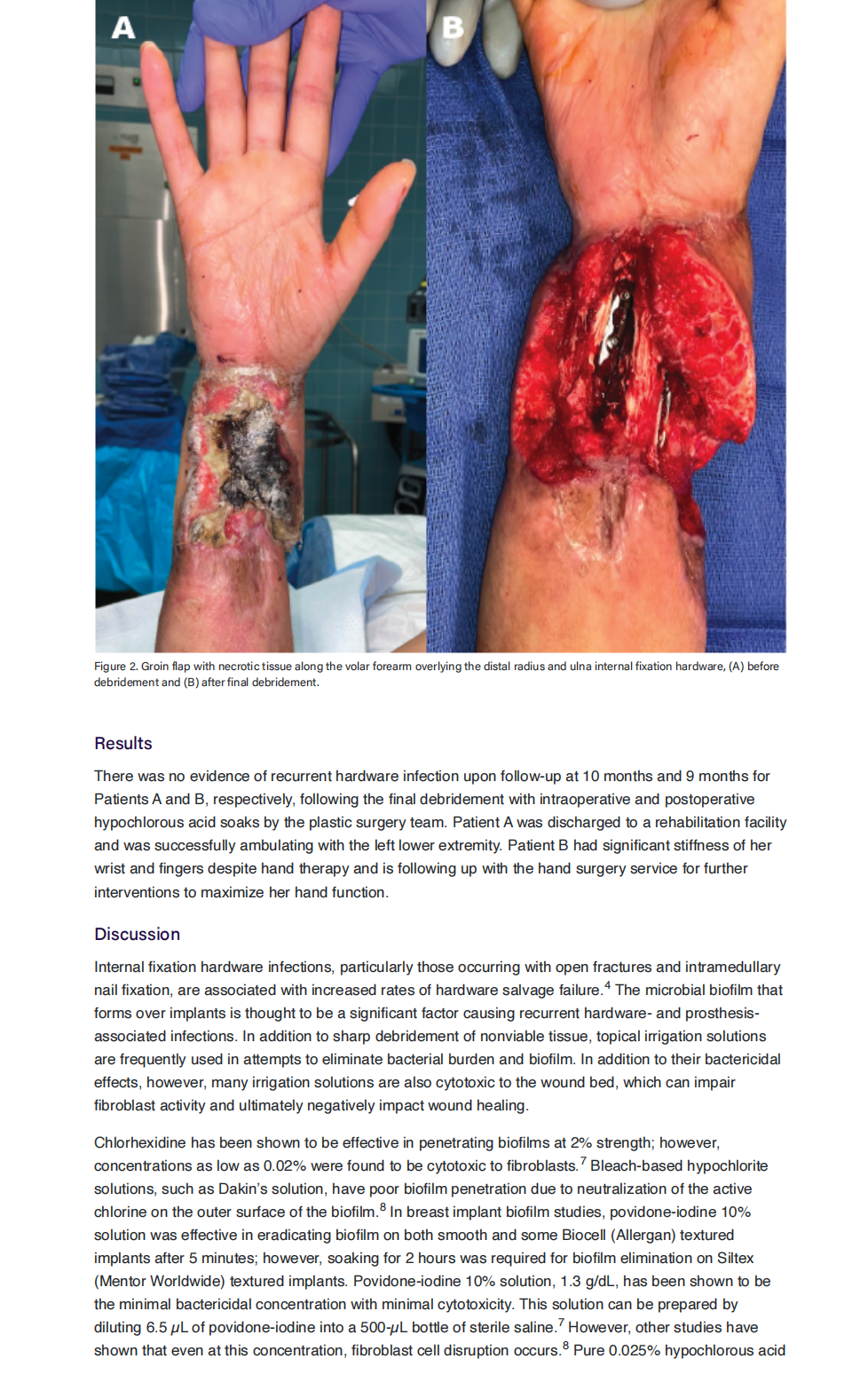
Methods. This article presents 2 patients with orthopedic hardware infection. Patient A had recurrent draining sinuses from an intramedullary nail in the femur. The orthopedic surgery team recommended above-knee amputation if hardware salvage was not possible. Patient B had a degloving injury of the right upper extremity with radius and ulna fractures that required revascularization and free flap coverage; when hardware infection developed, hardware removal would have required external fixator placement. In both patients, hypochlorous acid was used intraoperatively during debridement to soak the hardware for 5 minutes. Closed suction drains were placed along the hardware, and postoperative instillations of hypochlorous acid were placed through the drains for 5 minutes 1 to 2 times a day for 4 days for Patient A and 7 days for Patient
Results. On follow-up at 10 months for Patient A and at 9 months for Patient B, there was no evidence of recurrent hardware infection. Hardware was successfully salvaged in both patients.
Conclusions. Hypochlorous acid is an effective and safe topical antimicrobial agent for recurrent infections due to hardware-associated biofilm. Postoperative instillations of 0.025% hypochlorous acid through closed suctions drains may improve hardware salvage rates and optimize
Keywords PhaseOne Hypochlorous Acid Hardware Salvage Infected Hardware Biofilm
本文转载于ePlasty,不代表本网站赞同其观点和对其真实性负责,我们只作于阅读分享,非商业用途,如若侵权,请告知删除。